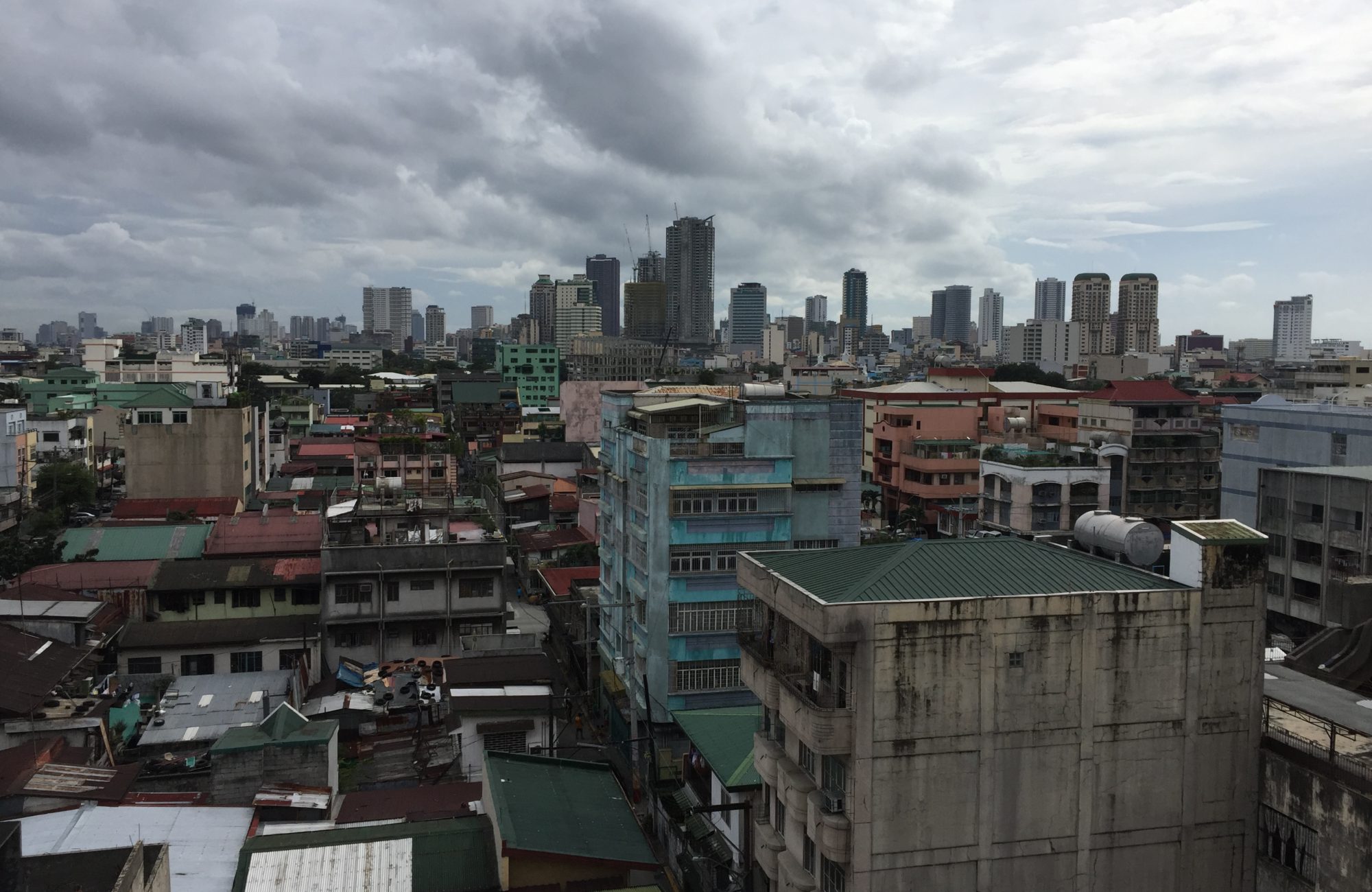

My wife and I just returned from a five-week visit to the Philippines. This turned out to be such an immersive adventure and an enlightening experience for me that I wanted to write it all down before it lost its immediacy and became just another memory.
What a trip this turned out to be. My wife is Filipino, with many friends and family in the Philippines, and we spent a lot of time with them. Having so much company during our visit was great, no doubt about it. For me, however, it was the breadth of the experiences I had during this pretty long trip that made me think about many things – cultural, political, historical – which is why this trip has become so important to me.
I did not intend to enter into such a reflective mood during this trip, but maybe that is what happens to you as you become older.
We were only going to be gone a month, but our travel agent found a great deal on a direct flight to Manila out of JFK. The catch was that we had to extend our trip an additional week. It seemed like a great idea at the time, and in retrospect the extra week made a difference. It made it feel like we had all the time in the world.
As the date of our departure drew nearer, my wife and I finalized our general itinerary, and a few weeks later it was time for us to leave. Our two pieces of luggage and two boxes of presents were finally packed. We dropped our ten-month-old kitten Mimosa off with her kitty cousins, kissed Mimosa good-by, and then we were off to the airport. We left New Jersey and its dreary snowless winter weather behind.
An 18-hour direct flight from JFK to Manila proved to be a grueling experience. At around hour 12 the seats turned hard and uncomfortable. The selection of movies and music lost any appeal, the food turned tasteless, and the last 6 hours of the flight became a test of my ability to endure physical discomfort. Finally, the plane landed in Manila, and the flight was over.
We were met outside the airport by one of my wife’s brothers and his family, which was a nice surprise. Somehow, all six of us piled into our Grab, a Toyota Innova, which was sort of like a Toyota Grand Highlander, and we were driven to our hotel.
Our first hotel in the Philippines was the Manila Hotel, an iconic historical landmark, and a wonderful combination of old-school elegance and modern conveniences. The Manila Hotel was the crown jewel of the development of the Philippines by then-governor William Howard Taft, who would go on to become the 27thPresident of the United States, and then a Supreme Court justice.
Part of this American development effort included the redesign of the capital city of Manila, which included the construction of the Manila Hotel as an appropriate residence for visiting dignitaries and the like. The Manila Hotel was the residence of General Douglas MacArthur during the first part of World War Two, was then partially destroyed by the Japanese, and was later rebuilt and expanded.
We arrived at the hotel when it was decorated for the Chinese New Year, complete with hundreds of red paper lanterns and a large red banner at the grand entrance to the lobby announcing that this was the beginning of the Year of the Rabbit. It was quite a sight.
The next day, after an overpriced breakfast buffet at the Manila Hotel, I tried to follow Google Maps on my cell phone as my wife and I walked towards the Intramuros area. Due to my limited familiarity with the Google Maps app, we immediately took a wrong turn at the first important intersection. Fortunately, a Filipino man on a tricycle appeared out of nowhere and became our guide for the next few hours. And so began our adventure.
The Intramuros area is essentially Old Manila, filled with historical landmarks of the Spanish occupation. This included many old forts and other fortifications, Roman Catholic churches, and other old and impressive colonial buildings. Apparently, the Spanish had to defend the Philippines against Japanese and Chinese pirates, and for a time against the Portuguese and English as well. Also of great significance during our tour was Rizal Park, where Filipino patriot and political martyr Jose Rizal was executed by the Spanish as a political threat to Spanish rule after being imprisoned within Intramuros at Fort Santiago.
The Philippines has a rich history of foreign influences, beginning with the Spanish, who ruled the Philippines as a colony for over 300 years before losing the Spanish-American War and having to surrender the Philippines to the U.S., along with Cuba, Puerto Rico, Guam, and a few other islands.
The U.S. governed the Philippines for the next 50 years, with the primary intention of allowing the Philippines to become an independent nation, but with some concessions, primarily military in nature.
The U.S. provided assistance to the Philippines in terms of developing a constitution, as well as instituting a democratic form of government, a civil service structure, a school system, and various infrastructure improvements, and as it so happens, introducing the English language. The primary language of the Filipino people may be Tagalog, but it also incorporates numerous English words and phrases to such an extent that the primary language of the Philippines may be more accurately referred to as Taglish.
Once the Filipino people began to govern themselves, my understanding is that they became tired of the U.S. military bases and the bars, prostitutes, and illegitimate children associated with them, as well as other residual aspects of U.S. presence. The Filipinos wanted the U.S. out of their country. Who could have foreseen that 30 years later the U.S. would be invited back?
I do think that the peaceful willingness of the U.S. to leave the Philippines when asked was an important and very positive act that has allowed the Philippines to redefine its relationship with the U.S. and allowed our two countries to retain close ties. Agreeing to leave voluntarily demonstrated respect for Filipino sovereignty and an acknowledgement that Filipino culture was its own. This mindset should have been the foundation of American foreign policy instead of nation building and geopolitical manipulation.
American influence in the Philippines is everywhere. From fast food restaurants to shopping malls to TV shows to music to celebrities and movie stars, it’s all Filipino but with a familial relationship to American culture. The relationship between our two countries is made closer by the 4.5 million Filipinos living in the U.S. who send money and balikbayan boxes full of goods back to the Philippines on a regular basis.
From what I can see, the American cultural influence is pretty innocuous and good natured. I worry, though, what will happen to the Philippines if China succeeds in exerting its repressive culture and forceful domination throughout the South China Sea region. The Philippines would appear to be next in line once Taiwan is liberated from its vibrant independence, its robust economy, and its democratic government.
For the time being, however, Chinese people are very welcome in the Philippines as tourists, investors, businessmen, and immigrants, so we will leave it at that.
As fate would have it, very rainy weather and a major roof leak in the house that we were to stay in prevented us from travelling to Pitogo, which Is in the province of Quezon. We were going to spend a few days with our Filipino friends from the U.S., and go to a town fiesta, but we were essentially rained out, so we spent a few more days in the Manila Hotel instead.
The next day we went to the Manila Zoo with one of my wife’s brothers and his family. It took over an hour just to gain entrance due to an overly involved process of issuing admission passes that made no sense to anyone. Once inside the zoo, it was pretty apparent that the zoo was not a priority of the city of Manila. Many of the animals that were supposed to be in the zoo weren’t there, just the signage. The animal habitats were run down and kind of depressing, to be honest.
In order to see my favorite animals, the monkeys, you had to purchase a special ticket to the children’s play area. In a way this made sense, since most small children are pretty much monkeys anyway. This seemed like a waste of time and pesos, so, we didn’t see the monkeys except for one lonely individual that was wandering around by itself in a forgotten corner of the zoo. Very strange. At least I was able to get myself photographed while holding a snake. This impressed my Filipino family very much. Interestingly enough, the snake was warm, smooth, and dry, which was the exact opposite of what I had expected. I really don’t know much about snakes.
The only bad food I had in the Philippines was after the zoo visit, when we walked for what felt like miles just to eat at the Tramway buffet, an unfortunate all-you-can-eat culinary experience that everyone should avoid. Even the workers didn’t seem to want to be there. A word of advice – stay away from the corned beef hash.
Our holiday continued on with five days in the island of Palawan, which is a very long island running north and south along the South China Sea to the west of the rest of the Philippines. Palawan is an extraordinary place, with such natural beauty, and for the most part is untouched by commercial development. We went with our friends from the U.S. as well as with three of my wife’s brothers and their wives.
We needed to take a flight from Manila to Puerto Princesa, the capital of the Palawan province, as Palawan is a few hundred miles away. A trip by boat was not a practical option.
It took us six hours in a tour van to drive from Puerto Princesa to El Nido on the north end of Palawan, so we were able to see the untouched way of life of many Filipino people living in the countryside away from the main Filipino municipalities. I asked our tour guide how these people survived, and I was told that they live off the sea, grow vegetables and fruits and rice, and raise chickens and goats. No need for electricity or fancy houses, pretty much living as their families have lived for generations.
These Americans who want to “live off the grid” and “have a zero-carbon footprint” could learn a great deal from these Filipinos instead of watching the Discovery Channel and reading Sierra Club magazines.
We experienced a few days of island hopping, which consisted of transport by a large wood and bamboo outrigger boat that was held together with wire and rope. We repeatedly had to get off and then back on the boat, often in pretty rough surf conditions. It’s a wonder that no one suffered more injury than cuts and scrapes and bruises. The boat crew was very friendly, helpful and accommodating, and did a good job of safeguarding our group of older, out of shape people.
One of the activities that some of us availed ourselves of, myself included, was kayaking. We would transfer from the outrigger boat into the kayak in the middle of the sea, trying to time the transfer with the movement of the waves. Life preservers on, lots of people around, never really in a dangerous condition, but still pretty thrilling, and we were able to get into island coves and inlets that the big boat could never access.
The islands are primarily striated rock that extends up from the sea to rise hundreds of feet into the air. This is the type of scenery that you typically see in the movies, and is something that I’ve never seen anywhere else.
Every day we were served lunch on the boat or on the beach, a feast of fresh fish and shrimp and crab and fruit and rice and pork and vegetables, all served very simply, with only lime-like calamansi to squeeze over the food. Very healthy, very simple, very appropriate for the natural beauty of the surroundings.
We stayed at the Lime Resort during our stay in El Nido. This is a modern hotel with a great breakfast buffet, questionable wi-fi, so-so restaurant service, and a killer infinity pool that overlooked the ocean. While we were there, a beautiful Asian influencer in a bikini was posing and posing and posing in the pool while her photographer boyfriend took photo after photo after photo of her as the sun slowly set over the sea. They finally got out of the pool, and we could all enjoy the real beauty of the setting.
The hotel had a little pizza kitchen off of the dining terrace, featuring one of those countertop pizza ovens. I did not realize it at first, but the back of the pizza area was open to a very green jungle-like garden, which is something that you would never see in any New Jersey pizzeria.
Originally, we were to have visited the Underground River on our way up to El Nido, but the Philippine Coast Guard had shut down all tourist activity on the ocean due to rough seas. We had to settle for visiting a crocodile farm, which housed some of the largest crocodiles that I have ever seen. Apparently, crocodiles are raised for food, shipped off for processing, and then eaten by Asian people, maybe even by others worldwide.
While at the crocodile farm, I was able to hold a small crocodile and have my picture taken for 100 pesos. I think that I have a thing for reptiles.
So, on our way back, we were finally able to visit the Underground River. We needed to take a small outrigger boat across open ocean, finally reaching a cove where we disembarked and made our way down a trail to the river, where we got onto an even smaller outrigger boat about the size of a canoe and entered the cave itself. The Underground River is one of the new 10 natural wonders of the world, so they say. A very quiet boat trip, with the only light provided by our guide’s lantern. Beautiful stalactite and stalagmite formations that have been given all sorts of cute names based upon their shape.
Apparently, we were only able to see a small part of the underground river cave system. If you are an anthropologist or researcher of some sort and get a permit, you could go further into the cave system and see even more. To be honest, I found the island hopping to be much more exciting.
After the Underground River, we stopped at a lunch buffet by the boat dock, and then rushed to the airport for our flight back to Manila.
My wife and I spent a night at some really inexpensive hotel that had been arranged by one of her nieces. I had eaten something called Tamalok at the lunch buffet following our visit to the Underground River. I did not feel so well, and had the chills, so I really didn’t care where we were staying. I was fine the next morning, so I think that it was more a digestive system shock than food poisoning. Tamalok is a Palawan delicacy recommended by our tour guide. Local delicacies can be kind of sketchy if your digestive system is not prepared, and mine certainly wasn’t.
Tamalok, also known as wood worm, is an oyster that doesn’t have its own shell, and will burrow into the dead submerged wood of mangrove trees and use the dead wood as its shell. I did not know any of this until later. I like raw oysters, but Tamalok did not taste that great, and I doubt if I will ever eat it again.
The next day we were dropped off at the Red Hotel in Cubao, which is part of the Quezon City section of Manila. The Red Hotel was a lot less money than the Manila Hotel, and was centrally located with respect to my wife’s family, so it was a great base of operations. The front of the hotel opened onto De Los Santos Boulevard and was a five-minute walk to a pedestrian overpass that led to a series of interconnected malls, including the famous SM department store, and lots of inexpensive restaurants to eat at.
The back of the hotel opened onto what appeared to be a sketchy street at night but during the day was just a typical Filipino urban street with shops, vendors, bars and budget hotels. This area probably was a little sketchy at night, and my wife was really concerned that I would get myself into a lot of trouble wandering around back there. I never did any night crawling, but during the day I felt totally safe.
My impression is that, with a bit more ability to speak Tagalog, I could become part of this sketchy neighborhood as long as I didn’t flash my relative wealth and followed my natural inclination to be polite, respectful, and good-natured. This is likely to be a good practice everywhere, in all cultures, at least in my opinion.
The nice thing about all the hotels we stayed at in the Philippines is that they were all provided with a water kettle. Being 220 voltage, it took just a couple of minutes for water to boil. We would buy 6 L bottles of filtered water from Mercury Drugs every other day and use the water for instant coffee, instant oatmeal, and various teas. There are Filipino rolls called Pan de Sol that are absolutely delicious. We bought jars of sardines and natural peanut butter and ate them with the Pan de Sol rolls for breakfast and dinner, so we only ate out once a day, and that was enough.
The Red Hotel would not let us borrow a few plates and sets of silverware, but did sell us plastic bento trays for 10 pesos each, and we used the heavy-duty plastic knives, forks and spoons that we kept from our Philippine Airlines flight, so we made do just fine. Also, I bought an inexpensive kitchen knife for cutting up fruit and the like, and that’s what we did.
One of the important events during our trip was the family reunion, with lechon as the centerpiece. Lechon is of course the famous Filipino whole roast pig. My wife Mimi is the oldest sister of eight siblings. She is pretty much the matriarch of the family now that their mother has passed away. So, this family reunion was a pretty big deal. Not being involved in setting it up, I had no idea what to expect, other than there would be Lechon and a swimming pool.
We arrived at the location of the family reunion after sundown when it was dark. The party compound was behind a heavy steel double door-like gate. The potential for crime is certainly present in the Philippines, similar in some ways to the poorer urban areas of the U.S. Stores are secured with metal roll-down shutters at night, residences have walls and gates and bars on the windows, and many establishments have armed guards, handguns, and in some instances pistol-grip shotguns. Such pre-emptive measures seem pretty effective, as I never saw any criminal activity at all, and never felt that I was in a dangerous situation.
The party compound consisted of two houses – one for the owner, and one for the celebrants. There was a long and narrow courtyard between the two houses and a big in-ground swimming pool in the back. The party house had a small kitchen, a pool table and karaoke, with two guest rooms on the second floor. I had expected something nicer, like a Caribbean resort, I suppose. Well, this was certainly not that, but as it turned out, the party compound worked out great and met everyone else’s expectations, so I was fine with it as well.
The family reunion was a great success. The first evening was spent eating and talking and drinking and laughing. Some went swimming. I confined myself to eating and drinking and smiling, with a little talking. The family reunion was kind of overwhelming for me, as there were about 40-50 people that I did not know very well and had a hard time keeping straight. I of course did my best, and had a great time.
I was very happy to see my wife spending time with her extended family after being away from the Philippines for many years. Lots of people checked on me to make sure I was doing ok and had enough to eat, which was very nice. The food was all home-cooked, a potluck of sorts, pretty simple and tasty enough.
The drinking commenced not long after dinner. Most of Mimi’s brothers can’t drink much anymore due to health concerns, but the nieces and nephews certainly can. The favorite drink was Alphonso II brandy mixed with Coke. I had quite a few. Everybody was happy.
At some point I went upstairs with my wife to a guest room and went to sleep. By the middle of the night, there were about nine or ten of us in the room sharing four beds. At some point the wall air conditioner stopped working, so it became very hot and humid in the room. But when you are tired you can sleep through anything, including non-stop all-night karaoke courtesy of the nephews.
In the early morning, the sounds of karaoke gave way to the crowing of roosters. I went downstairs and saw the lechon resting in all its glory on the folding plastic banquet tables in the courtyard. I went outside and saw that there were five or six caged fighting roosters across the narrow street from the compound. I went over and said good morning. One of Mimi’s brothers came out to make sure that I was ok, and then pointed out the old rooster in one of the cages, a survivor of a career of cock fighting. Not too many of his type around, I suppose.
So, more eating, no more drinking, more talking. I went swimming with one of my grand-nephews for a while, then played some pool. My wife was in the guest room selling handbags that she brought from the U.S., and passing out gifts. Lots of chismis I am sure, which is to say Filipino gossip. The family reunion went on until late in the afternoon, and then it was time to say good-by, a process that seemed to take forever. Now that’s a family reunion.
Just a brief mention of bathroom etiquette in the Philippines. Flush toilets are becoming more common, but it many places including our party compound Filipino flushing is what is done. Basically, a large ladle of water is poured into the toilet to get it to flush. Sometimes it takes more than one ladle. There is usually a large bucket filled with water under a faucet, and that is where you get the water. Kind of messy, so make sure to wear sandals and bring your own toilet paper.
Basic medical services are available in the Philippines and thank God for that. My wife suffers from gout and had a really bad gout attack four days into our trip. The Manila Hotel arranged for a doctor to see my wife at 10:00 at night. The doctor gave her a series of steroid injections that were excruciatingly painful for her but were just enough to let her continue on with our Palawan adventure the next day, all for about $150.
After the Palawan trip, after we had checked into the Red Hotel, and after our family reunion, my wife developed a really bad sore throat. We of course did an antigen test for Covid, which came back negative, so we walked over to a medical clinic in one of the nearby malls. After a two hour wait, a doctor interviewed my wife and prescribed an antibiotic for a possible strep infection, all for about $10. She felt better after a few days.
For some reason, after we got back from Palawan, my eyes started to water and itch, so I figured that I must be allergic to something. I picked up some Claritin and Robitussin from Mercury Drugs, and they more or less did the trick for me. Nice to find familiar products halfway around the world.
One of the things that a long trip like this underscores is that staying healthy is the key to being able to enjoy life.
Seniors get preferential treatment in the Philippines. Otherwise, we would have had to wait twice as long to see a doctor. Seniors also get 20% off in food stores, drug stores, restaurants, and public transportation, which is very nice.
This trip is certainly a refreshing change from my life in the U.S. I am taking advantage of my time in the Philippines to experience all the cultural differences that I can. I am also taking the opportunity to reflect on where I am at being 65 years old, and to imagine how the next 25 years of my life can bring me joy and contentment. Sort of like a five-week retreat for my body and soul.
It has been more difficult for my wife. So far, this trip has been physically taxing for her, and her ailments have been very much a part of her trip. She is feeling her 68 years, and I hope that she is willing to make some changes to her lifestyle that will allow her to avoid these health issues on our future adventures together.
That being said, we were invited to attend a 70th birthday party for the husband of one of my wife’s U.S. friends, who happens to also be Filipino. We got the invitation in the U.S. before we left for our trip. A month or so later, there we were in a good-sized event hall among 100 or so friends and family of the celebrant. There was a DJ, an MC, games and prizes, line dancing, and a nice buffet. It was pretty much like similar celebrations I’ve been at in the U.S. As the only non-Asian in the room, I of course got pulled into one of the games. I really did not understand all of the rules, but essentially the idea was to close one eye, turn around five times so that you would become disoriented, walk 20 feet across the room, and knock a calamansi fruit off the top of a beer bottle. I knocked over the beer bottle instead of the calamansi, but since I was on the winning team I won 1000 pesos. Not bad for a night’s work.
It’s the willingness to join in the moment that is important. Being a good sport about things seems to be appreciated in many cultures.
We visited the Manila North Cemetery a few days later to see my wife’s parents. This cemetery is a small city of mausoleums and crypts, packed together in a haphazard manner in all sorts of disparate styles. It’s probably a half-mile square, with narrow roads and alleyways, and no signage or other direction to tell you where you are going. There are many people living in the cemetery, some as caretakers, but others who appeared to be squatters. Many feral dogs as well. Not a good idea to try to pet them, as I understand that many have rabies. A great many poor people living among the dead, somehow surviving.
Later that same day we visited a private cemetery on the grounds of an old racetrack. We were there to see my wife’s aunt, with whom she had a somewhat difficult relationship. Her aunt rested with two of her sisters in a park-like setting, a very peaceful place for such a difficult woman. She was very controlling, she divided her family and set them against one another, using her money and properties as the means to do so. Now she is gone, and her manipulations seem to have accomplished nothing. My wife was very generous in both spirit and action towards her aunt while she was still alive with dementia. Visiting her in the cemetery may have been my wife’s way of finally saying good-by. RIP Aunt Lina.
My wife had a house where she lived with her first husband and their three daughters. After a decade of drama, ownership of the house reverted back to my wife, so we went by to see it. It was really run down after nearly 30 years of neglect. It is easy to get emotional about a family house that is full of memories. My wife would like to make repairs and improvements, but to what end? Sometimes it is better to let the past remain in the past, and keep your money in the bank.
However, the house is in a nice, safe, gated community, surrounded by much nicer houses. A basic cleaning and repainting would make quite a difference. There is a chance that some of my wife’s family could move in and pay rent, but if not I think that selling the house to her neighbor friend who would rent it out would be the best thing to do.
My wife and I had a nice lunch with her neighbor, and it was wonderful to see them together renewing their friendship after more than 25 years. Our visit to the Philippines seemed to be full of this type of moment.
One thing that I missed out on due to the timing of our trip was the Super Bowl. I followed the score on my phone. It sounds like it was a great game, down to the wire with Kansas City coming out on top. I probably could have found an American sports bar to see the game at 7:30 in the morning if it had been that important to me, but as it was it just seemed like that would have been too much effort. Maybe I’ll see the game on YouTube when I get back to the States.
Traffic in the greater Manila area takes some getting used to. There is a great deal of traffic – cars, trucks, motorcycles, motor scooters, jeepneys, buses, motor tricycles, pedal tricycles, bicycles, pedestrians – everything and everyone uses the same roads. Although it seems very chaotic, I’ve never seen a single accident. That’s because no one drives faster than 20 – 30 mph due to the amount of traffic on the roads, everyone is very attentive, and it is expected that you will slow down and let people cut in front of you. It is customary when someone cuts in front of you to then change lanes and cut in front of someone else. It then becomes their responsibility to slow down and let you cut in. The horn is used with a quick beep to let the person in front of you know that you are passing them. The horn is never to be used in an aggressive or angry manner.
Traffic in the Philippines has its own rhythm and flow that allows everyone to get to where they need to go. Traffic in the Philippines is very much a cooperative effort, whereas in the U.S. driving is an aggressive and competitive activity that often punishes those who are considerate. Insurance and collision repair is widespread in the U.S., but seems non-existent in the Philippines. There are a lot of Toyotas, Mitsubishis, and Nissans in the Philippines, some Hyundais, Kias, and Geelys, and an occasional Ford. I think I saw one or two Jeeps. American cars are pretty much nonexistent in the Philippines. Too big and too expensive, probably.
The number of scooters in the Philippines is unbelievable. Scooters are great transportation for one or two people and for various delivery services, because they can weave in and out and around the rest of the traffic, moving up to the head of the line. This is accepted practice. It is not uncommon to see groups of 30 or more scooters in a pack waiting for a traffic light to change. Scooters are everywhere, ridden by everyone, a practical and relatively inexpensive form of transportation. I can tell you that a pack of scooters is a lot quieter than a single Harley.
My wife and I have been eating one good meal a day, usually with one of her brother’s family. So, every day we have a small family get-together, based around a nice Filipino meal. It would be so easy to overeat. All it would take is making sure to have three solid meals a day.
So many Americans are very unhealthy because they are overweight or obese, yet seem to equate a good vacation with an overindulgence of food and drink. Me, I’m trying to eat like a Filipino and lose a few pounds. I admit, however, that I do love my occasional Red Horse Ale, which is a full-bodied local beer brewed by the San Miguel Brewing Company, and I do love my Halo-Halo.
Halo-Halo is my favorite dessert. Its foundation is shaved ice with coconut milk, and then various additions are made, usually put into the glass chalice first before the ice. Additions vary from halo-halo maker to maker, but almost always includes sweet beans, colored agar cubes, and jackfruit. Other additions may include coconut strips, banana slices, ube cake, ube ice cream, leche flan, and possibly a dollop of whipped cream and even a maraschino cherry on top. Every bite is different depending on what ends up in your spoon. An infinite combination of tastes and textures is possible, all combined with the sweet shaved ice that makes this the most refreshing and satisfying dessert ever.
Also known as mix-mix, once the ice in the halo-halo begins to melt the flavors of the ingredients meld into a milkshake consistency and I will drink this like the elixir that it is, finally revealing the bits of beans and other accompaniments that settled to the bottom of the chalice. I will eat this treasure, to the last bean.
The Filipinos love line dancing and karaoke, neither of which I am particularly fond of or good at. Eventually I will have to do karaoke, as Mimi’s nephews are beginning to think that there is something wrong with me since I have been refusing to pick up the microphone. So, karaoke is in my future. I probably need to learn some Journey songs, as Filipinos are very proud that one of their own – Arnel Pineda – is lead singer of Journey.
Speaking of music, Araneta Coliseum is not too far from the Red Hotel, and several times we have had to fight our way through hordes of fangirls of K-Pop, J-Pop, P-Pop, and C-Pop as they wait to see their favorite groups. These groups remind me of the boy bands in the U.S. from a few decades ago. Great dancers, great posers, ok singers. The boys wear so much makeup that it is hard to decide if they are boys or girls, they are so pretty. Boys or girls, I’m sure that they generate a lot of money along with the hysteria.
Anyway, we were planning on going to Puerto Galera for a weekend with Mimi’s sister and her husband, along with six of their closest family members and friends. This necessitated a five-hour private bus ride from the Red Hotel to Batangas, followed by a two-hour ferry ride. Halfway to the ferry landing, we found out that the Philippine Coast Guard had closed down all ferry service due to an off-shore typhoon that was generating 15 ft. high seas. I was ok with this, as being part of a news story about a capsized ferry in the Philippines is not my idea of an ideal vacation. We quickly rebooked a beach hotel in Batangas and proceeded on our way.
Sometimes fate is very kind. We stopped for lunch at the Coral Beach Club, and never left. The Coral Beach Club only had rooms available for one night, but it was a really nice place. The vibe was not Filipino or even Asian. The décor included wooden tribal masks mounted on the walls, including one mask that had a carved cigar sticking out of its mouth. Kind of funny, definitely not Filipino as I never saw a single Filipino smoking a cigar during the entire time we were in the Philippines. My guess was Australian, and sure enough, the owners were from Australia.
The Coral Beach Club is a small resort with around twenty rooms. The club had all the amenities needed for a short stay – a swimming pool, a billiards table, karaoke, big screen TVs, a bar, and an open-air restaurant.
We had a nice lunch, then went island hopping, which in this case involved cruising around in an outrigger boat, then anchoring out in the ocean for some swimming and snorkeling. Once we got back to the beach club we swam around in the pool until the sun went down, then went for dinner.
What a great dinner! So much Filipino food, including my favorite Filipino dish, sizzling sisig. Sisig is traditionally made from pork jowl and ears, pork belly, chicken liver, onions, chili peppers, and calamansi limes. This is not a very healthy dish, but in this particular instance it didn’t matter to me. This was the best sizzling sisig I have ever had. And, to top it all off, halo-halo.
And what a halo-halo it was! Perhaps it was the sea air, perhaps it was the jumbo size, perhaps it was the Red Horse that I enjoyed with my sisig, but this halo-halo became my favorite of all time.
The real attraction of our stay at the Coral Beach Club was the beach. Yes, it was filled with seaweed every morning that had to be raked off at dawn, and yes, the ocean floor was rocky and the water shallow, but there were dozens of bamboo party rafts that filled the sea next to the beach. The party rafts were the main attraction.
The party rafts were homemade of bamboo lashed together with wire, measuring about 15’ by 30’. Each had a canvas-covered awning over most of the raft, with a large table with bench seating underneath. There was a small changing room, and one or two lounge chairs, also made of bamboo.
The following morning after breakfast, our group waded out to our raft and climbed aboard. I found that sitting was a lot safer than trying to stand and walk and balance on the uneven bamboo raft. After a short time, our captain came and pushed the raft out into deeper water and then pulled it out further by throwing the anchor forward and then pulling on the anchor rope.
After a while, a small boat came out with a cooler full of food and water and beer. We unloaded the food onto the central table and enjoyed even more seafood, rice, chicken, pork, fish, eggplant, tomatoes, cucumbers, okra, and sinigang. What a great way to have a delicious lunch with friends and family, on a bamboo raft in the middle of the sea.
And then, out of nowhere, I heard the sound of a small bell ringing. I looked around for the bell but saw nothing. An then I saw him, a Filipino man swimming in the sea far from shore pushing a Styrofoam cooler and ringing a small bell. Ice cream! The ice cream man was swimming in the in the middle of the ocean just for us. Of course we bought ice cream, how could we not?
This shows the economic ingenuity of the Filipino people. Everyone finds a way to survive. Whether it is pushing and pulling bamboo rafts around in the water, or swimming in the sea to sell ice cream, or driving a lift or tricycle, the Filipinos do what it takes, and I was very impressed with this. When you live a simple life you don’t need much, just a little something to get by. And everyone always seemed happy.
Things are a little different in the big cities like Manila, and I understand that Cebu is the same. The poorest people live in shacks with no facilities, or live on the streets. They live off of the urban waste to get by. Better to live off the land in the province, perhaps.
It has been interesting to live for an extended period of time in a different culture, and to contrast how Americans live in the U.S. with how the Filipinos live in the Philippines. Many more people in the world live like the Filipinos do. We Americans are truly fortunate to have as much as we do. Unfortunately, most Americans will never understand how important this difference is, because they don’t venture out of their comfort zones very far when they travel to other countries, if they do so at all.
I am fortunate to have a Filipino wife who has introduced me to a different culture. Otherwise, I don’t see how I would be able to look at the world from such a different perspective.
In any event, I do see the world differently, and there is no going back.
The U.S. enjoys many luxuries that much of the world’s people will never experience. Many of these luxuries are as simple as having an excess of food, clean water, and energy, which Americans would never think of as luxuries but they are for much of the rest of the world. Another luxury is our general acceptance of selfish and anti-social behavior. From our celebrity and influencer-worshiping culture, to our admiration of the rich and privileged, to our rush to embrace wokeness and violence – our wealth as a country allows for all of this behavior to be glorified and accepted.
Most people in the world do not have the luxury of allowing each other to engage in such behavior. The Filipinos certainly have their celebrities, but my impression is that they see the rich and privileged as corrupt influences in their society, impediments to the ability of most Filipinos to live a better life and improve themselves. Unfortunately, the Filipino government is considered to be corrupt and is often part of the rich and privileged class, which is a real problem for the Philippines.
Because I certainly don’t want this travelogue to become too much of a political commentary, I will just end my comments by saying that the best thing that the U.S. could do is to acknowledge its flaws and be willing to accept that various aspects of other societies and cultures are more conducive to the ideals of freedom, life, liberty, and the pursuit of happiness upon which this country was founded than some of the questionable values and behaviors that we currently have. Enough said by this world traveler.
Speaking as a world traveler, which I really am not, there are some things about my packing that I wish I had done differently. My wife and I each had medium-sized suitcases, instead of the large suitcases that we had used on cruises. I still packed too many clothes. I wore a lot of my clothes for several days at a time, and finally began rinsing out underwear in the hotel sink, which worked out great. I would definitely bring fewer clothes and some laundry detergent for my next trip, and a few more plastic hangers.
In addition, eating in our hotel room was pretty convenient, particularly for breakfast and a late meal in the evening when the last thing you want to do is go out to a restaurant. Next time we will pack some reusable plastic plates, plastic mugs, and a small cutting board to go along with our Philippine Airlines cutlery and the kitchen knife I picked up on this trip. Also helpful would be a few dish towels, freezer storage bags, and rubber bands.
We had a voltage transformer with an assortment of plug adapters. This came in handy as not all hotels had USB ports, and not all hotels had outlets that would accept a standard U.S. style plug. Also, we brought flashlights, and a luggage scale.
We ended up buying small carry-on luggage, which we used when we made our overnight excursions. We left our main luggage in our Red Hotel room and just locked them up. If we were younger we probably would have purchased decent-sized backpacks instead of the carry-on luggage, but having something to roll instead of carry or drag made more sense for us.
I am providing this information as a public service to other travelers. No need to pay me, but I do have a Zelle account available FYI lol.
The thing is, you want to make your life as simple and convenient as possible when travelling for such a long time. There are things that are a lot more important than extra clothes, extra shoes, and an assortment of essential beauty products. Being beautiful and fashionable is not all that important in the Philippines, because no one cares what you look like. Everyone is wearing all sorts of clothing and footwear sent by relatives from the U.S., Australia, and other countries anyway. Everyone has knockoffs of everything, so being practical and comfortable is more important than making a fashion statement. Of course, you don’t want to look too much like a tourist or look ridiculous.
Just to let you know, I received a very traditional woven salakot hat as a gift a few days before we left. It was a well-made hat that looks like it should be worn in the rice patties by a farmer. It was not flexible at all, and proved to be impossible to pack in a suitcase. Risking accusations of cultural appropriation, I wore my salakot to the airport, through the airport, and onto the plane. If you are going to look like a ridiculous tourist, you have to be willing to go all the way.
By the way, nearly everyone in the Philippines wears a shoulder bag or a waist bag, as pickpockets and thieves are always a possibility. My waist bag was a little too small, but it certainly was convenient.
These suggestions are made with the assumption that you want to experience more of the day-to-day Filipino life, and not spend your time in the safety and security of a luxury resort surrounded by beautiful people who also have too much money, far removed from the actual culture of the country that you are visiting.
Speaking of visits, there was one visit that was very touching and that I will never forget. My wife had many aunts on her mother’s side of the family. One was a wealthy woman whose family owned a pig butchery who always gave my wife money when she was young, and gave my wife’s parents the pig scraps that could not be sold, but were edible and helped to feed my wife and her seven siblings. And one aunt, Aunt Zena, was a close sister to my wife’s mother. Aunt Zena is the one that we visited.
First we went for lunch. After a long Lift ride, we arrived at my wife’s cousin’s house. Again, a great deal of Filipino food and many new people for me to meet. After lunch, we took three tricycles on a crazy ride through town.
I am a good-sized guy, about 6’ tall and 205 lbs. on a good day, and I will tell you that I just don’t fit inside these motorcycle tricycles. It’s like getting into a small cage, and no bending or contortions will result in anything like a safe and comfortable position. In addition, my poor wife was in the cage with me trying to breathe. So, I ended up always riding behind the driver, sitting sidesaddle, holding on for dear life, and trying to keep my feet out of the drive chain that was inches away from my legs.
After the tricycle ride, our group was left outside a narrow alleyway in a very poor part of town. We walked down the alleyway. On either side were small dwellings maybe 10 ft. square, and we passed many people living in these dwellings, all of whom smiled at us as we walked by. We reached a doorway, and our group went inside.
And there she was, Aunt Zena, sitting in a wheelchair. She was so happy to see us, and so happy to see my wife and my wife’s sister, whom she had not seen in a very long time. Aunt Zena was about 85 years old, missing teeth, sores on her legs, but mentally very sharp. Apparently she has two sons who never see her and never send her money even though they have good lives, so Aunt Zena has to live in a very small space by herself. I think that her neighbors watch over her, and her niece comes to visit nearly every day to bring her food, and a little companionship, so she is not really alone. I will say that Aunt Zena was very nice to me and was very happy for our visit, all nine of us crowded into her room. She is the poorest person that I know in the Philippines.
We also visited the richest person I know in the Philippines. Remy married a second-generation Chinese-Filipino man 50 years ago, and they started a kitchen showroom/import business from next to nothing, a business that grew and grew, which made them a great deal of money. Remy says that when they started there was no competition. They set up sales arrangements with European kitchen cabinet and appliance companies, and catered to wealthy Filipinos. Now there is a great deal of competition, but the money has been made, and the business is still making money after all these years.
Remy and her husband live on the top floor of a three-story building, with a kitchen showroom on the bottom floor. The building itself sits behind a tall wall with heavy steel gates. There are many dogs to serve as watchmen at night. I remember visiting once before, so there was some familiarity for me. Much Filipino food was served for lunch at one of the round dining tables in the expansive main area of the house. Remy was a wonderful host, and I know that my wife very much enjoyed the opportunity to talk about all sorts of things. Remy was a good friend of my wife’s mother, and she helped my wife in various financial affairs once my wife’s mother passed away some years ago.
After lunch we got a tour of the house. Remy has an eclectic collection of furniture and artwork from all over the world. I had the impression that Remy and her husband travelled a great deal when they were younger. What I remember most is a photograph of their wedding day. Remy was an absolutely beautiful bride. My understanding is that in the past Chinese men would marry Filipino women so that they could settle in the Philippines, own property, and be businessmen. My wife tells me that this was not the case with Remy and her husband. All I can say is that her husband chose his wife well.
So, as it turns out, I ended up experiencing the economic disparity that is the Philippines, from the very poor to the very rich.
Our trip ended with a last few days staying back at the Manila Hotel where it all began. Chinese New Year was over, no more red paper lanterns and big red rabbit banner. We started packing for our return, and realized that we needed to buy a second large suitcase for all the things we were bringing back home. So off to the SM department store once again.
One of the things that really appeals to me about the Filipino lifestyle are the big Casio-style G-Shock watches that a lot of the Filipino men wear. There was a Casio store in one of the malls, and a lot of knock-offs available from street vendors, but the prices were better through Amazon, so I ordered my Filipino watch through Amazon for delivery to our house back home. Commerce and communication no longer seem to be dependent on geography or national borders. My watch is black and digital, with a backlit screen. Some would say that I am overcompensating for something with my big watch. I agree – it’s my aging eyes.
We had lunch at the Harbor View restaurant with my wife’s sister Teresa and her husband Rey after they brought us and our luggage from the Red Hotel to the Manila Hotel. We had fresh fish and various Filipino dishes, and then I split a Halo-Halo for dessert with my wife. The next evening, we had dinner in the Manila Hotel with our American Filipino friends Jun and Venus, who stayed in the Manila Hotel for a couple of nights to see some of their friends who lived nearby, and to see us off. It was a nice gesture on their part. No Filipino food this time, but Red Horse and then Halo-Halo. I have to admit, this was not the best combination.
The next morning, we finished packing and checked out of our room. We had a late lunch at the hotel, and Halo-Halo one last time. Then it was off to the airport, a bit of waiting, and then our 16-hour direct flight from Manila to JFK.
We landed in a snow storm, the only one of the winter season, but our Uber driver got us home safe and sound, and we were in bed by 3:00 am.
I’ve had a number of dreams about the Philippines since then, but nothing that compares to the absolutely wonderful time my wife and I spent there. This Filipino travelog can’t begin to describe the warmth of the people, the richness of the culture, and the beauty of the country. This is the type of travel that stays with you.
Cebu, Boracay, Bohol, the Rice Terraces – we’re already planning our next visit. There is still so much to see.
The U.S. is a cultural, economic, and military power. It is natural that we would think that our way of life is the best for everyone, but such a conceit is unfounded and annoying to everyone else. What is the point of experiencing different cultures if our expectation is that all cultures should be homogenized?
It is unfortunate that so many Americans have limited experience in traveling to different countries to see for themselves how cultures may differ but how fundamentally similar the values and social behaviors of free people are no matter where they are from.
Oppressive governments tend to ruin everything, restricting peoples’ natural inclinations and aspirations. This should be a warning to the Chinese, who enjoy great cultural and economic influence throughout the entire Asian region already. The failure of imperialism, including the failed efforts of the U.S. to spread western-style democracy around the world, should be a cautionary tale for them. Chinese imperialism is destined to fail. History tells us so.
This benevolent imperialism did not involve exploitation of the Filipino people or lands, which is probably why Americans are so welcomed in the Philippines.
The U.S. experience in the Philippines should be an example of how best to conduct our foreign relations.
Respecting the Filipino culture, providing assistance in ways that were complimentary to the Filipino culture, and knowing when it was time to leave is an approach to foreign relations that was unfortunately ignored by the U.S. in its foreign adventures in Vietnam, Cuba, Afghanistan, Iraq, and the entire region of Central America.