Too Much Noise, Not Enough Thinking (May, 2023)

I spent some time this morning drinking my first cup of coffee outside in our backyard, which is slowly becoming my version of an English garden. The air smelled fresh and clean, with a little chill to it. There was a slight mist in the air. The sky was softly overcast. 

I spent some time this morning drinking my first cup of coffee outside in our backyard, which is slowly becoming my version of an English garden. The air smelled fresh and clean, with a little chill to it. There was a slight mist in the air. The sky was softly overcast.

I studied our fenced-in garden and hoped that this would be the year that I could actually harvest some vegetables from it. I wondered if there would be an excess of cherries falling from the wild cherry trees that bordered the edge of our garden once the weather turned cold this fall. 

I heard the low rumbling of a freight train passing by some distance away. It was a quiet and peaceful way to spend the early morning.

And then, having finished my coffee, I went inside and turned on the news, because I like to stay involved and informed on the issues of the day.

There was so much self-righteous and excitedly hysterical talking about so many things that it was next to impossible to focus on what was most important. These days, it seems like a huge cacophony of noise is what passes for news, intelligent people spewing their opinions on every issue as if the most important thing in their lives is to convince the rest of us as to the brilliance of their curated point of view. So much clever posturing and political correctness, so little helpful perspective and common sense.

If there was ever going to be a time when moderate voices were desperately needed, that time is now. Unfortunately, there does not seem to be a forum for such boring and reasonable thought. My sense is that most people are quite comfortable with moderation, but are being forced to side with one extreme or the other because moderation is not an option.

The wokeness of the left demands de facto open borders, proactive support of trans people, profound distrust of the police, acceptance of institutional racism and white guilt, sympathy for criminals at the expense of victims, etc. Hardly anyone that I know of supports these woke beliefs.

The righteousness of the right demands the elimination of abortion and birth control, the freedom for anyone to own and carry a gun anywhere at any time, reductions in social programs that protect our most vulnerable citizens, a return to so-called Christian values, etc. Hardly anyone that I know of supports these righteous beliefs.

In point of fact, most Americans are uncomfortable with or outright reject all of these woke and righteous beliefs. This is what opinion polls repeatedly tell us and common sense confirms. Living at the extremes is not for most of us.

The observation has been made by many, many people for many, many years that our government acts in ways that are directly contrary to the will and interests of its citizens, and we are seeing this play out in our lives every day. We are being forced to accept one extreme or the other, often based solely upon what state we happen to live in. 

As a moderate person, I am disgusted by the self-serving and shallow nature of our Democratic and Republican parties and by FOX, CNN, MSNBC, NEWSMAX, et al. I find their attempts to manipulate what I think and what I feel to be reprehensible. 

I am certain that there are senators and representatives of both parties who are moderates and are very much aware of how our current system is failing the people. Why is it so hard for them to speak up and speak out? 

Is it the power of dark money and the promises and threats that it represents? Is it a belief that fighting the wokeness and the righteousness would be a pointless and exhausting Don Quixote effort? Is it a cynical lack of commitment to the American people in exchange for a sense of self-importance? 

Or is it that moderation is not sexy, provocative, emotion-laden, and worthy of prime-time? 

Have focus groups shown politicians and the media alike that moderation is a hard sell because it brings no drama with it and instead requires the type of active listening and critical thinking that seems to be out of fashion? 

Have we all been conditioned to respond only to extremes and to welcome the reassuring noise of instant analysis instead of having our own quiet moments and listening to our own thoughts? 

Perhaps, the idea of free will is just an illusion, experienced only by those of us who rage against the system with violence and manifestos and other expressions of anti-social behavior while the rest of us remain numb and accept being controlled.

I say listen to the crazy people if you want to know what is really going on.

Presidential Ambitions (March, 2023)

While many aspire to be President, few inspire when they become President. 

This has been a serious problem for many years now. As we begin our new election cycle, I suggest that we try something different and make the effort to consider just what type of person we want to have lead and represent us, and use that knowledge as we begin to choose our next President.

What does an inspirational President look like? Let us consider our last three presidents, Barack Obama, Donald Trump, and Joseph Biden.

Barack Obama was inspirational to his liberal urban base before he became president, less so during his presidency, even more so now after his presidency since he became a glittery rock star. Donald Trump was inspirational to his MAGA base before, during, and after his presidency, and remains their populist icon who can literally do no wrong. However, both men failed to inspire those who did not vote for them. Both were limited by their inability to rise above the partisanship of politics. Some would argue that Barack Obama made the attempt and was rebuffed, but clearly Donald Trump made no attempt and instead embraced the worst aspects of partisanship.

President Biden became President after 32 years of running because the other Democratic candidates were unelectable, because his lack of vision and purpose was able to be hidden behind Covid, and because Donald Trump’s form of strong-man anti-democratic ego-driven leadership became tiresome and disturbing. Even with all the stars aligning, Joseph Biden just barely became President, and has done nothing since to inspire anyone.

So, given our recent history of questionable choices, a fresh approach is clearly needed. What should we be looking for in a President? We have less than two years to figure this out. This is not a very long time for such an important choice, and none of the announced or likely-to-announce Presidential candidates are particularly inspiring, at least to me.

So, some of you might ask, what exactly am I looking for in our next President? I will tell you, whether you are interested or not. Someone has to begin this important conversation.

Seeing and Accepting Reality – Most Americans are forced to deal with the reality of their world every day and make practical choices in order to have a decent life. It is a peculiar trait of politicians to be able to ignore reality and instead perceive the world through the lens of partisan thinking and a myopic focus on being reelected. Unlike other politicians, however, our President must be able to see the state of the world and our country clearly and realistically in order to recognize both opportunity and danger, and consequently act in a timely and significant manner. Our next President cannot be an effective leader with a perception of reality that differs from that of the people and the rest of the world.

Having a Global Perspective – The great burden of dominance that has been borne by the United States since the end of World War II has been as much a curse as it has been a blessing. The sacrifices made in both wealth expended and lives lost far exceed the sacrifices made by any other country during this period. The world owes much to the United States for the past sixty-seven years of relative peace and prosperity, and for the improvements to the human condition that have occurred in many parts of the world. 

Now much of the world flexes its muscles and demands to set its own direction. This is an inevitable and hopefully positive development, and is a direct outcome of the leadership of the United States. 

However, the past is now in the past, and new relationships between countries will develop based upon current geopolitical conditions. Our next President must recognize that the United States is no longer in a preeminent position and can take nothing for granted. It is crucial that our next President be able to listen carefully to what the world is saying and respond in a manner that respects the sovereignty of other nations while advancing our own interests and perspectives.

Understanding Democracy – American democracy is based upon our Constitution, is preserved through the rule of law, and is dependent on the consent of the governed. Ultimately, it is the will of the people that dictates our laws based upon customs, traditions, history, and a shared sense of justice. Our next President must be aware of the will of the people at all times, to acknowledge public opinion whether in support or opposition, and to engage with the people in an honest and forthright manner to explain decisions and policies in order to obtain their agreement or at least their understanding. 

In addition, our next President must accept that other democracies will from time to time wish to act on their own accord in a manner contrary our own inclinations, which is in of itself an expression of democracy. The world must have the freedom to consider alternative points of view.

Taking the Long View – Decisions made to address immediate concerns with short-term solutions are by definition temporary and inadequate, ultimately requiring a series of additional short-term solutions until a more substantive solution can be reached. While short-term solutions are unavoidable, a President must strive to always take the long view. Our next President must endeavor to make decisions and policies that are based upon thoughtful, logical analysis so that future administrations will choose to build upon them instead of rejecting them out of hand.

Acknowledging Limitations – The power of the Presidency is extraordinary. Commander-in-Chief of the most powerful military in the world, administrator of the largest economy in the world, leader of the oldest democracy in the world, host of the United Nations within our country’s borders – no leader has ever commanded so much power. 

However, the United States is no longer the sole military superpower in the world. Our economy operates independently of the government with the exception of regulations and tax law. Our democracy is mired in partisanship and manipulated by special interests. Changing geopolitics restricts our options around the world. 

There are very real limitations as to what the President and the United States can do. Our next President must be optimistic, but at the same time must also be careful not to overreach and overpromise.

Choosing Equality over Equity – The difference between equality and equity is very simple. Equality is intended to ensure that all groups of people will receive the same opportunities and the same treatment without regard to race, creed, religion, age, disability, sex, and sexual orientation. Equity is intended to compensate for past, present, and anticipated future injustices by providing select groups of people with advantageous opportunities and advantageous treatment. 

Equality, by its very nature, is inclusive and affirmative. Equity, by its very nature, is divisive and punitive. Our next President must be prepared to acknowledge that inequities have and will occur, but must always govern on the basis of equality.

Being Strong and Decisive – A President must be strong and decisive in order to be an effective leader. This has nothing to do with policy, although poorly-conceived policies may very well limit the ability of a President to lead once the support of the people is lost. Being strong and decisive has much more to do with the character of a President.  A strong leader does not have to command and demand the respect of the governed. A strong leader receives the freely given respect of the governed when the people choose to believe in, have confidence in, and put their trust in their leader.

A President who is unsure of the support of the people will appear weak and indecisive, and is more likely to compensate for this by making foolish decisions based upon impulse instead of reasoned deliberation. Ultimately, the strength of our next President will be derived from the support of the people, but it will have to be earned.

Willing to Change Direction – The willingness to acknowledge failure and do something different is not something that most politicians ever exhibit, at least not publicly. However, a President must be prepared to change course when a policy or decision or law does not accomplish its original intent, or as often happens, makes things worse. 

Acknowledging failure is a sign of emotional intelligence, and when done in a direct and decisive manner is both admirable and reassuring. Our next President must always endeavor to do what benefits the people even if it means risking personal embarrassment and political criticism. 

Respecting Individual Freedoms – In a democracy such as ours, laws and regulations are intended to provide a balance between individual freedoms and the common good. There is a tendency for governments to exert excessive control over some individual freedoms, and to exert inadequate control over others. This is because people in government are often influenced by personal bias, religious beliefs, financial incentives, and political considerations, resulting in decisions that are many times not in the best interests of either the people or the common good. 

Our next President must be able to rise above these influences, and must always choose to give preference to our individual freedoms whenever possible in the course of protecting the common good.

Seeking Opposing Points of View – It is a given that a President must have a staff and a cabinet that supports and is willing to carry out the President’s plan of action. However, there is a great likelihood that some of what a President intends to do is either inadvisable or is very likely to fail. In addition, it is often the case that the best course of action is unclear and may have unforeseen consequences. 

In order to have the best chance of success, a President must not rely solely on the opinions of close advisors on their staff and members of their own political party in determining a course of action. Those who disagree with the President may be the ones who are right, and our next President should actively seek out opposing points of view for this reason.

Communicating Directly and Honestly – A President must have the trust of the people in order to have an effective presidency. The best way to obtain this trust is to speak to the people directly and honestly, and with great frequency. Every program, every law, and every policy must have its intended purpose and expected result explained clearly and, except for reasons of national security, with a significant amount of detail. 

A President must be willing and able to justify to the people what is being done on their behalf. The American people will lose trust and respect for a President who is perceived as being less than forthright, misleading, and/or secretive, and who refuses to provide either explanation or justification for their actions. Our next President cannot lead from the shadows. 

Practicing Compassion and Empathy – A President must care deeply for the American people. When there is great accomplishment, a President must be the first to pay tribute. When there is great tragedy, a President must be the first to offer condolences. Both tribute and condolence must be heartfelt, personal and public, without even a hint of politicization.

A President must have empathy for those of us who are poor, disabled, infirm, old, alone, homeless, or hungry. A President must see those who feel unseen and make every effort to make them feel welcome and appreciated. At times a President must be a warrior, but other times a President must be a shepherd. Our next President must be prepared to excel in both roles.

Encouraging Vigilance and Preparedness – A President’s first priority is to protect the country and the American people from enemies both foreign and domestic. We have had the good fortune to be able to take our safety and security for granted for decades, but that time has passed. A President cannot be complacent in the face of threats, but must prepare for them proactively and with the expectation that the worst-case scenario will occur. 

Our next President must encourage vigilance at our borders, within our cities, and everywhere throughout the world so that threats to our freedoms can be recognized and all necessary action taken to prevent the worst-case scenario from happening.

Avoiding Partisanship – In order to be an effective leader, a President must represent the interests of all the people. When a President follows the politically expedient partisan approach to governing, it ensures that the interests of half the people in the country will not receive proper consideration. 

Partisanship has had an extraordinarily divisive and weakening effect on our country. It has resulted in a damaging cycle of retribution and gross disrespect as political power has moved back and forth from one political party to the other. To end this cycle, our next President must avoid partisanship at all costs and always insist on the active involvement of the minority party in all matters of governance.

Exhibiting a Sense of Humor – Having a sense of humor is a sign of emotional balance, situational awareness, and self-confidence. When used judicially, a sense of humor can ease tensions, provide perspective, and establish a human connection. In general, a President with a sense of humor becomes more likeable and approachable, particularly if the humor comes from their own experiences. 

An exception to this is a President whose humor comes at the expense of others. While this type of humor can serve to make a point, it can also be seen as cruel and demeaning, particularly if such humor is used repeatedly and publicly. Our next President must use such humor skillfully, like a rapier, not a cudgel. 

Opposing Corruptive Influences – The use of a political office or political appointment to enrich oneself at the expense of the public good is an unfortunate yet widespread practice. In other countries, politicians receive their compensation, whether it be by theft or bribe, either directly or through an intermediary. In this country, politicians receive their compensation as dark money through PACs, think tanks, and foundations, with the money coming from foreign governments, corporate entities, and labor unions. 

While it may be nearly impossible for a politician to be so principled as to never let corruptive influences affect their actions, we should never find this to be acceptable. Our next President must always oppose corruptive influences and must always act in the public good.

Being Principled, Moral and Ethical – The character of a person determines their effectiveness as a leader. A person who is driven to achieve greatness and is willing to embrace corruption, eliminate rivals, ignore the suffering of others, and act with cruel self-ambition may very well become a leader, but can only lead through intimidation, coercion, and fear. 

A democracy such as ours will never choose such a leader, but we see this type of leader in totalitarian regimes throughout the world. A President must be prepared to oppose such leaders through strength of character and with the full and unwavering support of the country. Our next President must be principled, moral, and ethical, and always speak with the support and trust of the people, even in the darkest of times.

Leading by Example – Consistency of words spoken with actions then taken cannot be overstated in its importance. The most beautiful of promises turns into the ugliest of lies very quickly when broken. Relationships can be damaged irreparably by such betrayals. Words spoken by a President are important, but subsequent action is more substantive and revealing of true intentions. 

This is why a President must understand that every word they speak will be studied for its meaning and intention, but the actions of their administration and, by extension, those of the country will speak louder than any spoken word. The actions we take as a country become the example we set as a nation. Our next President must understand that our standing in the world as a country and as a people is based upon what we do, not upon the words we speak. 

Embracing Faith – A President who professes no faith other than in themselves cannot truly understand the spiritual motivations of the three-quarters of the people of the world who profess to have faith. All faiths serve to guide those who believe to live in peace with others, to accept the frailties and limitations of human life, to appreciate family and community, and to value a life that includes service to others. 

Such a common bond that crosses the borders between countries and peoples offers a basis for a President to reach out to the minds, hearts, and souls of everyone. Our next President must have the wisdom to embrace this gift as they endeavor to lead the country.

There you have it. Nineteen presidential character traits that define a leader.

As I review this list of character traits, it strikes me that this is a great deal to expect from one person. And yet, why should we not expect the best in our leaders, particularly in our President? 

It would be easy to dismiss this list as naïve and simplistic wishful thinking. However, we should all take the time to think about the importance of character in those who would lead us. All too often, we settle for individuals who are motivated by their own ambitions for power and profit.

We listen to candidates who mislead with flowery phrases and strongly-spoken rhetoric, yet fail to consider their underlying nature. Even after they reveal who they are once they achieve office, we choose to overlook their failings as if their failings did not matter, and then we reelect them again and again.

What does all this say about our own character? How many of these profoundly important character traits can we honestly say that we ourselves possess? The disappointment in our political institutions that we express in opinion poll after opinion poll – did we not elect these people to represent us? I for one think that it is time for us to hold ourselves to this higher standard.

There is no more important position in the world right now than the President of the United States. The world is experiencing unsettled times and it is becoming increasingly difficult to preserve a peaceful world order. How this country and our allies respond to the various geo-political and environmental threats that we now face will determine to what extent chaos and human suffering spreads throughout the world. 

Our next President must be prepared to lead us through these uncertain times, to advocate for peace and cooperation, to stand resolute in the face of threats and intimidation, and to inspire other nations to reject the proposed new world order that encourages aggression and imperialistic control at the expense of life, liberty, and the pursuit of happiness. 

And as for the rest of us? We must begin to be a people worthy of our own country.

Filipino Travelogue (March 2023)

My wife and I just returned from a five-week visit to the Philippines. This turned out to be such an immersive adventure and an enlightening experience for me that I wanted to write it all down before it lost its immediacy and became just another memory. 

What a trip this turned out to be. My wife is Filipino, with many friends and family in the Philippines, and we spent a lot of time with them. Having so much company during our visit was great, no doubt about it. For me, however, it was the breadth of the experiences I had during this pretty long trip that made me think about many things – cultural, political, historical – which is why this trip has become so important to me. 

I did not intend to enter into such a reflective mood during this trip, but maybe that is what happens to you as you become older.

We were only going to be gone a month, but our travel agent found a great deal on a direct flight to Manila out of JFK. The catch was that we had to extend our trip an additional week. It seemed like a great idea at the time, and in retrospect the extra week made a difference. It made it feel like we had all the time in the world.

As the date of our departure drew nearer, my wife and I finalized our general itinerary, and a few weeks later it was time for us to leave. Our two pieces of luggage and two boxes of presents were finally packed. We dropped our ten-month-old kitten Mimosa off with her kitty cousins, kissed Mimosa good-by, and then we were off to the airport. We left New Jersey and its dreary snowless winter weather behind.

An 18-hour direct flight from JFK to Manila proved to be a grueling experience. At around hour 12 the seats turned hard and uncomfortable. The selection of movies and music lost any appeal, the food turned tasteless, and the last 6 hours of the flight became a test of my ability to endure physical discomfort. Finally, the plane landed in Manila, and the flight was over.

We were met outside the airport by one of my wife’s brothers and his family, which was a nice surprise. Somehow, all six of us piled into our Grab, a Toyota Innova, which was sort of like a Toyota Grand Highlander, and we were driven to our hotel. 

Our first hotel in the Philippines was the Manila Hotel, an iconic historical landmark, and a wonderful combination of old-school elegance and modern conveniences. The Manila Hotel was the crown jewel of the development of the Philippines by then-governor William Howard Taft, who would go on to become the 27thPresident of the United States, and then a Supreme Court justice. 

Part of this American development effort included the redesign of the capital city of Manila, which included the construction of the Manila Hotel as an appropriate residence for visiting dignitaries and the like. The Manila Hotel was the residence of General Douglas MacArthur during the first part of World War Two, was then partially destroyed by the Japanese, and was later rebuilt and expanded. 

We arrived at the hotel when it was decorated for the Chinese New Year, complete with hundreds of red paper lanterns and a large red banner at the grand entrance to the lobby announcing that this was the beginning of the Year of the Rabbit. It was quite a sight.

The next day, after an overpriced breakfast buffet at the Manila Hotel, I tried to follow Google Maps on my cell phone as my wife and I walked towards the Intramuros area. Due to my limited familiarity with the Google Maps app, we immediately took a wrong turn at the first important intersection. Fortunately, a Filipino man on a tricycle appeared out of nowhere and became our guide for the next few hours. And so began our adventure.

The Intramuros area is essentially Old Manila, filled with historical landmarks of the Spanish occupation. This included many old forts and other fortifications, Roman Catholic churches, and other old and impressive colonial buildings. Apparently, the Spanish had to defend the Philippines against Japanese and Chinese pirates, and for a time against the Portuguese and English as well. Also of great significance during our tour was Rizal Park, where Filipino patriot and political martyr Jose Rizal was executed by the Spanish as a political threat to Spanish rule after being imprisoned within Intramuros at Fort Santiago.

The Philippines has a rich history of foreign influences, beginning with the Spanish, who ruled the Philippines as a colony for over 300 years before losing the Spanish-American War and having to surrender the Philippines to the U.S., along with Cuba, Puerto Rico, Guam, and a few other islands. 

The U.S. governed the Philippines for the next 50 years, with the primary intention of allowing the Philippines to become an independent nation, but with some concessions, primarily military in nature.

The U.S. provided assistance to the Philippines in terms of developing a constitution, as well as instituting a democratic form of government, a civil service structure, a school system, and various infrastructure improvements, and as it so happens, introducing the English language. The primary language of the Filipino people may be Tagalog, but it also incorporates numerous English words and phrases to such an extent that the primary language of the Philippines may be more accurately referred to as Taglish. 

Once the Filipino people began to govern themselves, my understanding is that they became tired of the U.S. military bases and the bars, prostitutes, and illegitimate children associated with them, as well as other residual aspects of U.S. presence. The Filipinos wanted the U.S. out of their country. Who could have foreseen that 30 years later the U.S. would be invited back?

I do think that the peaceful willingness of the U.S. to leave the Philippines when asked was an important and very positive act that has allowed the Philippines to redefine its relationship with the U.S. and allowed our two countries to retain close ties. Agreeing to leave voluntarily demonstrated respect for Filipino sovereignty and an acknowledgement that Filipino culture was its own. This mindset should have been the foundation of American foreign policy instead of nation building and geopolitical manipulation.

American influence in the Philippines is everywhere. From fast food restaurants to shopping malls to TV shows to music to celebrities and movie stars, it’s all Filipino but with a familial relationship to American culture. The relationship between our two countries is made closer by the 4.5 million Filipinos living in the U.S. who send money and balikbayan boxes full of goods back to the Philippines on a regular basis.

From what I can see, the American cultural influence is pretty innocuous and good natured. I worry, though, what will happen to the Philippines if China succeeds in exerting its repressive culture and forceful domination throughout the South China Sea region. The Philippines would appear to be next in line once Taiwan is liberated from its vibrant independence, its robust economy, and its democratic government.

For the time being, however, Chinese people are very welcome in the Philippines as tourists, investors, businessmen, and immigrants, so we will leave it at that.

As fate would have it, very rainy weather and a major roof leak in the house that we were to stay in prevented us from travelling to Pitogo, which Is in the province of Quezon. We were going to spend a few days with our Filipino friends from the U.S., and go to a town fiesta, but we were essentially rained out, so we spent a few more days in the Manila Hotel instead.

The next day we went to the Manila Zoo with one of my wife’s brothers and his family. It took over an hour just to gain entrance due to an overly involved process of issuing admission passes that made no sense to anyone. Once inside the zoo, it was pretty apparent that the zoo was not a priority of the city of Manila. Many of the animals that were supposed to be in the zoo weren’t there, just the signage. The animal habitats were run down and kind of depressing, to be honest.

In order to see my favorite animals, the monkeys, you had to purchase a special ticket to the children’s play area. In a way this made sense, since most small children are pretty much monkeys anyway. This seemed like a waste of time and pesos, so, we didn’t see the monkeys except for one lonely individual that was wandering around by itself in a forgotten corner of the zoo. Very strange. At least I was able to get myself photographed while holding a snake. This impressed my Filipino family very much. Interestingly enough, the snake was warm, smooth, and dry, which was the exact opposite of what I had expected. I really don’t know much about snakes.

The only bad food I had in the Philippines was after the zoo visit, when we walked for what felt like miles just to eat at the Tramway buffet, an unfortunate all-you-can-eat culinary experience that everyone should avoid. Even the workers didn’t seem to want to be there. A word of advice – stay away from the corned beef hash. 

Our holiday continued on with five days in the island of Palawan, which is a very long island running north and south along the South China Sea to the west of the rest of the Philippines. Palawan is an extraordinary place, with such natural beauty, and for the most part is untouched by commercial development. We went with our friends from the U.S. as well as with three of my wife’s brothers and their wives. 

We needed to take a flight from Manila to Puerto Princesa, the capital of the Palawan province, as Palawan is a few hundred miles away. A trip by boat was not a practical option. 

It took us six hours in a tour van to drive from Puerto Princesa to El Nido on the north end of Palawan, so we were able to see the untouched way of life of many Filipino people living in the countryside away from the main Filipino municipalities. I asked our tour guide how these people survived, and I was told that they live off the sea, grow vegetables and fruits and rice, and raise chickens and goats. No need for electricity or fancy houses, pretty much living as their families have lived for generations.

These Americans who want to “live off the grid” and “have a zero-carbon footprint” could learn a great deal from these Filipinos instead of watching the Discovery Channel and reading Sierra Club magazines.

We experienced a few days of island hopping, which consisted of transport by a large wood and bamboo outrigger boat that was held together with wire and rope. We repeatedly had to get off and then back on the boat, often in pretty rough surf conditions. It’s a wonder that no one suffered more injury than cuts and scrapes and bruises. The boat crew was very friendly, helpful and accommodating, and did a good job of safeguarding our group of older, out of shape people. 

One of the activities that some of us availed ourselves of, myself included, was kayaking. We would transfer from the outrigger boat into the kayak in the middle of the sea, trying to time the transfer with the movement of the waves. Life preservers on, lots of people around, never really in a dangerous condition, but still pretty thrilling, and we were able to get into island coves and inlets that the big boat could never access. 

The islands are primarily striated rock that extends up from the sea to rise hundreds of feet into the air. This is the type of scenery that you typically see in the movies, and is something that I’ve never seen anywhere else. 

Every day we were served lunch on the boat or on the beach, a feast of fresh fish and shrimp and crab and fruit and rice and pork and vegetables, all served very simply, with only lime-like calamansi to squeeze over the food. Very healthy, very simple, very appropriate for the natural beauty of the surroundings.

We stayed at the Lime Resort during our stay in El Nido. This is a modern hotel with a great breakfast buffet, questionable wi-fi, so-so restaurant service, and a killer infinity pool that overlooked the ocean. While we were there, a beautiful Asian influencer in a bikini was posing and posing and posing in the pool while her photographer boyfriend took photo after photo after photo of her as the sun slowly set over the sea. They finally got out of the pool, and we could all enjoy the real beauty of the setting. 

The hotel had a little pizza kitchen off of the dining terrace, featuring one of those countertop pizza ovens. I did not realize it at first, but the back of the pizza area was open to a very green jungle-like garden, which is something that you would never see in any New Jersey pizzeria.

Originally, we were to have visited the Underground River on our way up to El Nido, but the Philippine Coast Guard had shut down all tourist activity on the ocean due to rough seas. We had to settle for visiting a crocodile farm, which housed some of the largest crocodiles that I have ever seen. Apparently, crocodiles are raised for food, shipped off for processing, and then eaten by Asian people, maybe even by others worldwide. 

While at the crocodile farm, I was able to hold a small crocodile and have my picture taken for 100 pesos. I think that I have a thing for reptiles.

So, on our way back, we were finally able to visit the Underground River. We needed to take a small outrigger boat across open ocean, finally reaching a cove where we disembarked and made our way down a trail to the river, where we got onto an even smaller outrigger boat about the size of a canoe and entered the cave itself. The Underground River is one of the new 10 natural wonders of the world, so they say. A very quiet boat trip, with the only light provided by our guide’s lantern. Beautiful stalactite and stalagmite formations that have been given all sorts of cute names based upon their shape.

Apparently, we were only able to see a small part of the underground river cave system. If you are an anthropologist or researcher of some sort and get a permit, you could go further into the cave system and see even more. To be honest, I found the island hopping to be much more exciting.

After the Underground River, we stopped at a lunch buffet by the boat dock, and then rushed to the airport for our flight back to Manila. 

My wife and I spent a night at some really inexpensive hotel that had been arranged by one of her nieces. I had eaten something called Tamalok at the lunch buffet following our visit to the Underground River. I did not feel so well, and had the chills, so I really didn’t care where we were staying. I was fine the next morning, so I think that it was more a digestive system shock than food poisoning. Tamalok is a Palawan delicacy recommended by our tour guide. Local delicacies can be kind of sketchy if your digestive system is not prepared, and mine certainly wasn’t. 

Tamalok, also known as wood worm, is an oyster that doesn’t have its own shell, and will burrow into the dead submerged wood of mangrove trees and use the dead wood as its shell. I did not know any of this until later. I like raw oysters, but Tamalok did not taste that great, and I doubt if I will ever eat it again.

The next day we were dropped off at the Red Hotel in Cubao, which is part of the Quezon City section of Manila. The Red Hotel was a lot less money than the Manila Hotel, and was centrally located with respect to my wife’s family, so it was a great base of operations. The front of the hotel opened onto De Los Santos Boulevard and was a five-minute walk to a pedestrian overpass that led to a series of interconnected malls, including the famous SM department store, and lots of inexpensive restaurants to eat at. 

The back of the hotel opened onto what appeared to be a sketchy street at night but during the day was just a typical Filipino urban street with shops, vendors, bars and budget hotels. This area probably was a little sketchy at night, and my wife was really concerned that I would get myself into a lot of trouble wandering around back there. I never did any night crawling, but during the day I felt totally safe.

My impression is that, with a bit more ability to speak Tagalog, I could become part of this sketchy neighborhood as long as I didn’t flash my relative wealth and followed my natural inclination to be polite, respectful, and good-natured. This is likely to be a good practice everywhere, in all cultures, at least in my opinion.

The nice thing about all the hotels we stayed at in the Philippines is that they were all provided with a water kettle. Being 220 voltage, it took just a couple of minutes for water to boil. We would buy 6 L bottles of filtered water from Mercury Drugs every other day and use the water for instant coffee, instant oatmeal, and various teas. There are Filipino rolls called Pan de Sol that are absolutely delicious. We bought jars of sardines and natural peanut butter and ate them with the Pan de Sol rolls for breakfast and dinner, so we only ate out once a day, and that was enough. 

The Red Hotel would not let us borrow a few plates and sets of silverware, but did sell us plastic bento trays for 10 pesos each, and we used the heavy-duty plastic knives, forks and spoons that we kept from our Philippine Airlines flight, so we made do just fine. Also, I bought an inexpensive kitchen knife for cutting up fruit and the like, and that’s what we did.

One of the important events during our trip was the family reunion, with lechon as the centerpiece. Lechon is of course the famous Filipino whole roast pig. My wife Mimi is the oldest sister of eight siblings. She is pretty much the matriarch of the family now that their mother has passed away. So, this family reunion was a pretty big deal. Not being involved in setting it up, I had no idea what to expect, other than there would be Lechon and a swimming pool.

We arrived at the location of the family reunion after sundown when it was dark. The party compound was behind a heavy steel double door-like gate. The potential for crime is certainly present in the Philippines, similar in some ways to the poorer urban areas of the U.S. Stores are secured with metal roll-down shutters at night, residences have walls and gates and bars on the windows, and many establishments have armed guards, handguns, and in some instances pistol-grip shotguns. Such pre-emptive measures seem pretty effective, as I never saw any criminal activity at all, and never felt that I was in a dangerous situation. 

The party compound consisted of two houses – one for the owner, and one for the celebrants. There was a long and narrow courtyard between the two houses and a big in-ground swimming pool in the back. The party house had a small kitchen, a pool table and karaoke, with two guest rooms on the second floor. I had expected something nicer, like a Caribbean resort, I suppose. Well, this was certainly not that, but as it turned out, the party compound worked out great and met everyone else’s expectations, so I was fine with it as well. 

The family reunion was a great success. The first evening was spent eating and talking and drinking and laughing. Some went swimming. I confined myself to eating and drinking and smiling, with a little talking. The family reunion was kind of overwhelming for me, as there were about 40-50 people that I did not know very well and had a hard time keeping straight. I of course did my best, and had a great time.

I was very happy to see my wife spending time with her extended family after being away from the Philippines for many years. Lots of people checked on me to make sure I was doing ok and had enough to eat, which was very nice. The food was all home-cooked, a potluck of sorts, pretty simple and tasty enough.

The drinking commenced not long after dinner. Most of Mimi’s brothers can’t drink much anymore due to health concerns, but the nieces and nephews certainly can. The favorite drink was Alphonso II brandy mixed with Coke. I had quite a few. Everybody was happy.

At some point I went upstairs with my wife to a guest room and went to sleep. By the middle of the night, there were about nine or ten of us in the room sharing four beds. At some point the wall air conditioner stopped working, so it became very hot and humid in the room. But when you are tired you can sleep through anything, including non-stop all-night karaoke courtesy of the nephews.

In the early morning, the sounds of karaoke gave way to the crowing of roosters. I went downstairs and saw the lechon resting in all its glory on the folding plastic banquet tables in the courtyard. I went outside and saw that there were five or six caged fighting roosters across the narrow street from the compound. I went over and said good morning. One of Mimi’s brothers came out to make sure that I was ok, and then pointed out the old rooster in one of the cages, a survivor of a career of cock fighting. Not too many of his type around, I suppose.

So, more eating, no more drinking, more talking. I went swimming with one of my grand-nephews for a while, then played some pool. My wife was in the guest room selling handbags that she brought from the U.S., and passing out gifts. Lots of chismis I am sure, which is to say Filipino gossip. The family reunion went on until late in the afternoon, and then it was time to say good-by, a process that seemed to take forever. Now that’s a family reunion.

Just a brief mention of bathroom etiquette in the Philippines. Flush toilets are becoming more common, but it many places including our party compound Filipino flushing is what is done. Basically, a large ladle of water is poured into the toilet to get it to flush. Sometimes it takes more than one ladle. There is usually a large bucket filled with water under a faucet, and that is where you get the water. Kind of messy, so make sure to wear sandals and bring your own toilet paper. 

Basic medical services are available in the Philippines and thank God for that. My wife suffers from gout and had a really bad gout attack four days into our trip. The Manila Hotel arranged for a doctor to see my wife at 10:00 at night. The doctor gave her a series of steroid injections that were excruciatingly painful for her but were just enough to let her continue on with our Palawan adventure the next day, all for about $150. 

After the Palawan trip, after we had checked into the Red Hotel, and after our family reunion, my wife developed a really bad sore throat. We of course did an antigen test for Covid, which came back negative, so we walked over to a medical clinic in one of the nearby malls. After a two hour wait, a doctor interviewed my wife and prescribed an antibiotic for a possible strep infection, all for about $10. She felt better after a few days.

For some reason, after we got back from Palawan, my eyes started to water and itch, so I figured that I must be allergic to something. I picked up some Claritin and Robitussin from Mercury Drugs, and they more or less did the trick for me. Nice to find familiar products halfway around the world.

One of the things that a long trip like this underscores is that staying healthy is the key to being able to enjoy life. 

Seniors get preferential treatment in the Philippines. Otherwise, we would have had to wait twice as long to see a doctor. Seniors also get 20% off in food stores, drug stores, restaurants, and public transportation, which is very nice.

This trip is certainly a refreshing change from my life in the U.S. I am taking advantage of my time in the Philippines to experience all the cultural differences that I can. I am also taking the opportunity to reflect on where I am at being 65 years old, and to imagine how the next 25 years of my life can bring me joy and contentment. Sort of like a five-week retreat for my body and soul.

It has been more difficult for my wife. So far, this trip has been physically taxing for her, and her ailments have been very much a part of her trip. She is feeling her 68 years, and I hope that she is willing to make some changes to her lifestyle that will allow her to avoid these health issues on our future adventures together.

That being said, we were invited to attend a 70th birthday party for the husband of one of my wife’s U.S. friends, who happens to also be Filipino. We got the invitation in the U.S. before we left for our trip. A month or so later, there we were in a good-sized event hall among 100 or so friends and family of the celebrant. There was a DJ, an MC, games and prizes, line dancing, and a nice buffet. It was pretty much like similar celebrations I’ve been at in the U.S. As the only non-Asian in the room, I of course got pulled into one of the games. I really did not understand all of the rules, but essentially the idea was to close one eye, turn around five times so that you would become disoriented, walk 20 feet across the room, and knock a calamansi fruit off the top of a beer bottle. I knocked over the beer bottle instead of the calamansi, but since I was on the winning team I won 1000 pesos. Not bad for a night’s work.

It’s the willingness to join in the moment that is important. Being a good sport about things seems to be appreciated in many cultures.

We visited the Manila North Cemetery a few days later to see my wife’s parents. This cemetery is a small city of mausoleums and crypts, packed together in a haphazard manner in all sorts of disparate styles. It’s probably a half-mile square, with narrow roads and alleyways, and no signage or other direction to tell you where you are going. There are many people living in the cemetery, some as caretakers, but others who appeared to be squatters. Many feral dogs as well. Not a good idea to try to pet them, as I understand that many have rabies. A great many poor people living among the dead, somehow surviving.

Later that same day we visited a private cemetery on the grounds of an old racetrack. We were there to see my wife’s aunt, with whom she had a somewhat difficult relationship. Her aunt rested with two of her sisters in a park-like setting, a very peaceful place for such a difficult woman. She was very controlling, she divided her family and set them against one another, using her money and properties as the means to do so. Now she is gone, and her manipulations seem to have accomplished nothing. My wife was very generous in both spirit and action towards her aunt while she was still alive with dementia. Visiting her in the cemetery may have been my wife’s way of finally saying good-by. RIP Aunt Lina.

My wife had a house where she lived with her first husband and their three daughters. After a decade of drama, ownership of the house reverted back to my wife, so we went by to see it. It was really run down after nearly 30 years of neglect. It is easy to get emotional about a family house that is full of memories. My wife would like to make repairs and improvements, but to what end? Sometimes it is better to let the past remain in the past, and keep your money in the bank.

However, the house is in a nice, safe, gated community, surrounded by much nicer houses. A basic cleaning and repainting would make quite a difference. There is a chance that some of my wife’s family could move in and pay rent, but if not I think that selling the house to her neighbor friend who would rent it out would be the best thing to do. 

My wife and I had a nice lunch with her neighbor, and it was wonderful to see them together renewing their friendship after more than 25 years. Our visit to the Philippines seemed to be full of this type of moment. 

One thing that I missed out on due to the timing of our trip was the Super Bowl. I followed the score on my phone. It sounds like it was a great game, down to the wire with Kansas City coming out on top. I probably could have found an American sports bar to see the game at 7:30 in the morning if it had been that important to me, but as it was it just seemed like that would have been too much effort. Maybe I’ll see the game on YouTube when I get back to the States.

Traffic in the greater Manila area takes some getting used to. There is a great deal of traffic – cars, trucks, motorcycles, motor scooters, jeepneys, buses, motor tricycles, pedal tricycles, bicycles, pedestrians – everything and everyone uses the same roads. Although it seems very chaotic, I’ve never seen a single accident. That’s because no one drives faster than 20 – 30 mph due to the amount of traffic on the roads, everyone is very attentive, and it is expected that you will slow down and let people cut in front of you. It is customary when someone cuts in front of you to then change lanes and cut in front of someone else. It then becomes their responsibility to slow down and let you cut in. The horn is used with a quick beep to let the person in front of you know that you are passing them. The horn is never to be used in an aggressive or angry manner. 

Traffic in the Philippines has its own rhythm and flow that allows everyone to get to where they need to go. Traffic in the Philippines is very much a cooperative effort, whereas in the U.S. driving is an aggressive and competitive activity that often punishes those who are considerate. Insurance and collision repair is widespread in the U.S., but seems non-existent in the Philippines. There are a lot of Toyotas, Mitsubishis, and Nissans in the Philippines, some Hyundais, Kias, and Geelys, and an occasional Ford. I think I saw one or two Jeeps. American cars are pretty much nonexistent in the Philippines. Too big and too expensive, probably.

The number of scooters in the Philippines is unbelievable. Scooters are great transportation for one or two people and for various delivery services, because they can weave in and out and around the rest of the traffic, moving up to the head of the line. This is accepted practice. It is not uncommon to see groups of 30 or more scooters in a pack waiting for a traffic light to change. Scooters are everywhere, ridden by everyone, a practical and relatively inexpensive form of transportation. I can tell you that a pack of scooters is a lot quieter than a single Harley. 

My wife and I have been eating one good meal a day, usually with one of her brother’s family. So, every day we have a small family get-together, based around a nice Filipino meal. It would be so easy to overeat. All it would take is making sure to have three solid meals a day. 

So many Americans are very unhealthy because they are overweight or obese, yet seem to equate a good vacation with an overindulgence of food and drink. Me, I’m trying to eat like a Filipino and lose a few pounds. I admit, however, that I do love my occasional Red Horse Ale, which is a full-bodied local beer brewed by the San Miguel Brewing Company, and I do love my Halo-Halo.

Halo-Halo is my favorite dessert. Its foundation is shaved ice with coconut milk, and then various additions are made, usually put into the glass chalice first before the ice. Additions vary from halo-halo maker to maker, but almost always includes sweet beans, colored agar cubes, and jackfruit. Other additions may include coconut strips, banana slices, ube cake, ube ice cream, leche flan, and possibly a dollop of whipped cream and even a maraschino cherry on top. Every bite is different depending on what ends up in your spoon. An infinite combination of tastes and textures is possible, all combined with the sweet shaved ice that makes this the most refreshing and satisfying dessert ever. 

Also known as mix-mix, once the ice in the halo-halo begins to melt the flavors of the ingredients meld into a milkshake consistency and I will drink this like the elixir that it is, finally revealing the bits of beans and other accompaniments that settled to the bottom of the chalice. I will eat this treasure, to the last bean.

The Filipinos love line dancing and karaoke, neither of which I am particularly fond of or good at. Eventually I will have to do karaoke, as Mimi’s nephews are beginning to think that there is something wrong with me since I have been refusing to pick up the microphone. So, karaoke is in my future. I probably need to learn some Journey songs, as Filipinos are very proud that one of their own – Arnel Pineda – is lead singer of Journey.

Speaking of music, Araneta Coliseum is not too far from the Red Hotel, and several times we have had to fight our way through hordes of fangirls of K-Pop, J-Pop, P-Pop, and C-Pop as they wait to see their favorite groups. These groups remind me of the boy bands in the U.S. from a few decades ago. Great dancers, great posers, ok singers. The boys wear so much makeup that it is hard to decide if they are boys or girls, they are so pretty. Boys or girls, I’m sure that they generate a lot of money along with the hysteria.

Anyway, we were planning on going to Puerto Galera for a weekend with Mimi’s sister and her husband, along with six of their closest family members and friends. This necessitated a five-hour private bus ride from the Red Hotel to Batangas, followed by a two-hour ferry ride. Halfway to the ferry landing, we found out that the Philippine Coast Guard had closed down all ferry service due to an off-shore typhoon that was generating 15 ft. high seas. I was ok with this, as being part of a news story about a capsized ferry in the Philippines is not my idea of an ideal vacation. We quickly rebooked a beach hotel in Batangas and proceeded on our way. 

Sometimes fate is very kind. We stopped for lunch at the Coral Beach Club, and never left. The Coral Beach Club only had rooms available for one night, but it was a really nice place. The vibe was not Filipino or even Asian. The décor included wooden tribal masks mounted on the walls, including one mask that had a carved cigar sticking out of its mouth. Kind of funny, definitely not Filipino as I never saw a single Filipino smoking a cigar during the entire time we were in the Philippines. My guess was Australian, and sure enough, the owners were from Australia. 

The Coral Beach Club is a small resort with around twenty rooms. The club had all the amenities needed for a short stay – a swimming pool, a billiards table, karaoke, big screen TVs, a bar, and an open-air restaurant. 

We had a nice lunch, then went island hopping, which in this case involved cruising around in an outrigger boat, then anchoring out in the ocean for some swimming and snorkeling. Once we got back to the beach club we swam around in the pool until the sun went down, then went for dinner. 

What a great dinner! So much Filipino food, including my favorite Filipino dish, sizzling sisig. Sisig is traditionally made from pork jowl and ears, pork belly, chicken liver, onions, chili peppers, and calamansi limes. This is not a very healthy dish, but in this particular instance it didn’t matter to me. This was the best sizzling sisig I have ever had. And, to top it all off, halo-halo. 

And what a halo-halo it was! Perhaps it was the sea air, perhaps it was the jumbo size, perhaps it was the Red Horse that I enjoyed with my sisig, but this halo-halo became my favorite of all time. 

The real attraction of our stay at the Coral Beach Club was the beach. Yes, it was filled with seaweed every morning that had to be raked off at dawn, and yes, the ocean floor was rocky and the water shallow, but there were dozens of bamboo party rafts that filled the sea next to the beach. The party rafts were the main attraction.

The party rafts were homemade of bamboo lashed together with wire, measuring about 15’ by 30’. Each had a canvas-covered awning over most of the raft, with a large table with bench seating underneath. There was a small changing room, and one or two lounge chairs, also made of bamboo. 

The following morning after breakfast, our group waded out to our raft and climbed aboard. I found that sitting was a lot safer than trying to stand and walk and balance on the uneven bamboo raft. After a short time, our captain came and pushed the raft out into deeper water and then pulled it out further by throwing the anchor forward and then pulling on the anchor rope. 

After a while, a small boat came out with a cooler full of food and water and beer. We unloaded the food onto the central table and enjoyed even more seafood, rice, chicken, pork, fish, eggplant, tomatoes, cucumbers, okra, and sinigang. What a great way to have a delicious lunch with friends and family, on a bamboo raft in the middle of the sea.

And then, out of nowhere, I heard the sound of a small bell ringing. I looked around for the bell but saw nothing. An then I saw him, a Filipino man swimming in the sea far from shore pushing a Styrofoam cooler and ringing a small bell. Ice cream! The ice cream man was swimming in the in the middle of the ocean just for us. Of course we bought ice cream, how could we not? 

This shows the economic ingenuity of the Filipino people. Everyone finds a way to survive. Whether it is pushing and pulling bamboo rafts around in the water, or swimming in the sea to sell ice cream, or driving a lift or tricycle, the Filipinos do what it takes, and I was very impressed with this. When you live a simple life you don’t need much, just a little something to get by. And everyone always seemed happy.

Things are a little different in the big cities like Manila, and I understand that Cebu is the same. The poorest people live in shacks with no facilities, or live on the streets. They live off of the urban waste to get by. Better to live off the land in the province, perhaps.

It has been interesting to live for an extended period of time in a different culture, and to contrast how Americans live in the U.S. with how the Filipinos live in the Philippines. Many more people in the world live like the Filipinos do. We Americans are truly fortunate to have as much as we do. Unfortunately, most Americans will never understand how important this difference is, because they don’t venture out of their comfort zones very far when they travel to other countries, if they do so at all.

I am fortunate to have a Filipino wife who has introduced me to a different culture. Otherwise, I don’t see how I would be able to look at the world from such a different perspective.

In any event, I do see the world differently, and there is no going back.

The U.S. enjoys many luxuries that much of the world’s people will never experience. Many of these luxuries are as simple as having an excess of food, clean water, and energy, which Americans would never think of as luxuries but they are for much of the rest of the world. Another luxury is our general acceptance of selfish and anti-social behavior. From our celebrity and influencer-worshiping culture, to our admiration of the rich and privileged, to our rush to embrace wokeness and violence – our wealth as a country allows for all of this behavior to be glorified and accepted.  

Most people in the world do not have the luxury of allowing each other to engage in such behavior. The Filipinos certainly have their celebrities, but my impression is that they see the rich and privileged as corrupt influences in their society, impediments to the ability of most Filipinos to live a better life and improve themselves. Unfortunately, the Filipino government is considered to be corrupt and is often part of the rich and privileged class, which is a real problem for the Philippines.

Because I certainly don’t want this travelogue to become too much of a political commentary, I will just end my comments by saying that the best thing that the U.S. could do is to acknowledge its flaws and be willing to accept that various aspects of other societies and cultures are more conducive to the ideals of freedom, life, liberty, and the pursuit of happiness upon which this country was founded than some of the questionable values and behaviors that we currently have. Enough said by this world traveler.

Speaking as a world traveler, which I really am not, there are some things about my packing that I wish I had done differently. My wife and I each had medium-sized suitcases, instead of the large suitcases that we had used on cruises. I still packed too many clothes. I wore a lot of my clothes for several days at a time, and finally began rinsing out underwear in the hotel sink, which worked out great. I would definitely bring fewer clothes and some laundry detergent for my next trip, and a few more plastic hangers. 

In addition, eating in our hotel room was pretty convenient, particularly for breakfast and a late meal in the evening when the last thing you want to do is go out to a restaurant. Next time we will pack some reusable plastic plates, plastic mugs, and a small cutting board to go along with our Philippine Airlines cutlery and the kitchen knife I picked up on this trip. Also helpful would be a few dish towels, freezer storage bags, and rubber bands. 

We had a voltage transformer with an assortment of plug adapters. This came in handy as not all hotels had USB ports, and not all hotels had outlets that would accept a standard U.S. style plug. Also, we brought flashlights, and a luggage scale.

We ended up buying small carry-on luggage, which we used when we made our overnight excursions. We left our main luggage in our Red Hotel room and just locked them up. If we were younger we probably would have purchased decent-sized backpacks instead of the carry-on luggage, but having something to roll instead of carry or drag made more sense for us. 

I am providing this information as a public service to other travelers. No need to pay me, but I do have a Zelle account available FYI lol.

The thing is, you want to make your life as simple and convenient as possible when travelling for such a long time. There are things that are a lot more important than extra clothes, extra shoes, and an assortment of essential beauty products. Being beautiful and fashionable is not all that important in the Philippines, because no one cares what you look like. Everyone is wearing all sorts of clothing and footwear sent by relatives from the U.S., Australia, and other countries anyway. Everyone has knockoffs of everything, so being practical and comfortable is more important than making a fashion statement. Of course, you don’t want to look too much like a tourist or look ridiculous.

Just to let you know, I received a very traditional woven salakot hat as a gift a few days before we left. It was a well-made hat that looks like it should be worn in the rice patties by a farmer. It was not flexible at all, and proved to be impossible to pack in a suitcase. Risking accusations of cultural appropriation, I wore my salakot to the airport, through the airport, and onto the plane. If you are going to look like a ridiculous tourist, you have to be willing to go all the way.

By the way, nearly everyone in the Philippines wears a shoulder bag or a waist bag, as pickpockets and thieves are always a possibility. My waist bag was a little too small, but it certainly was convenient.

These suggestions are made with the assumption that you want to experience more of the day-to-day Filipino life, and not spend your time in the safety and security of a luxury resort surrounded by beautiful people who also have too much money, far removed from the actual culture of the country that you are visiting.

Speaking of visits, there was one visit that was very touching and that I will never forget. My wife had many aunts on her mother’s side of the family. One was a wealthy woman whose family owned a pig butchery who always gave my wife money when she was young, and gave my wife’s parents the pig scraps that could not be sold, but were edible and helped to feed my wife and her seven siblings. And one aunt, Aunt Zena, was a close sister to my wife’s mother. Aunt Zena is the one that we visited.

First we went for lunch. After a long Lift ride, we arrived at my wife’s cousin’s house. Again, a great deal of Filipino food and many new people for me to meet. After lunch, we took three tricycles on a crazy ride through town. 

I am a good-sized guy, about 6’ tall and 205 lbs. on a good day, and I will tell you that I just don’t fit inside these motorcycle tricycles. It’s like getting into a small cage, and no bending or contortions will result in anything like a safe and comfortable position. In addition, my poor wife was in the cage with me trying to breathe. So, I ended up always riding behind the driver, sitting sidesaddle, holding on for dear life, and trying to keep my feet out of the drive chain that was inches away from my legs.

After the tricycle ride, our group was left outside a narrow alleyway in a very poor part of town. We walked down the alleyway. On either side were small dwellings maybe 10 ft. square, and we passed many people living in these dwellings, all of whom smiled at us as we walked by. We reached a doorway, and our group went inside. 

And there she was, Aunt Zena, sitting in a wheelchair. She was so happy to see us, and so happy to see my wife and my wife’s sister, whom she had not seen in a very long time. Aunt Zena was about 85 years old, missing teeth, sores on her legs, but mentally very sharp. Apparently she has two sons who never see her and never send her money even though they have good lives, so Aunt Zena has to live in a very small space by herself. I think that her neighbors watch over her, and her niece comes to visit nearly every day to bring her food, and a little companionship, so she is not really alone. I will say that Aunt Zena was very nice to me and was very happy for our visit, all nine of us crowded into her room. She is the poorest person that I know in the Philippines. 

We also visited the richest person I know in the Philippines. Remy married a second-generation Chinese-Filipino man 50 years ago, and they started a kitchen showroom/import business from next to nothing, a business that grew and grew, which made them a great deal of money. Remy says that when they started there was no competition. They set up sales arrangements with European kitchen cabinet and appliance companies, and catered to wealthy Filipinos. Now there is a great deal of competition, but the money has been made, and the business is still making money after all these years.

Remy and her husband live on the top floor of a three-story building, with a kitchen showroom on the bottom floor. The building itself sits behind a tall wall with heavy steel gates. There are many dogs to serve as watchmen at night. I remember visiting once before, so there was some familiarity for me. Much Filipino food was served for lunch at one of the round dining tables in the expansive main area of the house. Remy was a wonderful host, and I know that my wife very much enjoyed the opportunity to talk about all sorts of things. Remy was a good friend of my wife’s mother, and she helped my wife in various financial affairs once my wife’s mother passed away some years ago.

After lunch we got a tour of the house. Remy has an eclectic collection of furniture and artwork from all over the world. I had the impression that Remy and her husband travelled a great deal when they were younger. What I remember most is a photograph of their wedding day. Remy was an absolutely beautiful bride. My understanding is that in the past Chinese men would marry Filipino women so that they could settle in the Philippines, own property, and be businessmen. My wife tells me that this was not the case with Remy and her husband. All I can say is that her husband chose his wife well. 

So, as it turns out, I ended up experiencing the economic disparity that is the Philippines, from the very poor to the very rich. 

Our trip ended with a last few days staying back at the Manila Hotel where it all began. Chinese New Year was over, no more red paper lanterns and big red rabbit banner. We started packing for our return, and realized that we needed to buy a second large suitcase for all the things we were bringing back home. So off to the SM department store once again. 

One of the things that really appeals to me about the Filipino lifestyle are the big Casio-style G-Shock watches that a lot of the Filipino men wear. There was a Casio store in one of the malls, and a lot of knock-offs available from street vendors, but the prices were better through Amazon, so I ordered my Filipino watch through Amazon for delivery to our house back home. Commerce and communication no longer seem to be dependent on geography or national borders. My watch is black and digital, with a backlit screen. Some would say that I am overcompensating for something with my big watch. I agree – it’s my aging eyes.

We had lunch at the Harbor View restaurant with my wife’s sister Teresa and her husband Rey after they brought us and our luggage from the Red Hotel to the Manila Hotel. We had fresh fish and various Filipino dishes, and then I split a Halo-Halo for dessert with my wife. The next evening, we had dinner in the Manila Hotel with our American Filipino friends Jun and Venus, who stayed in the Manila Hotel for a couple of nights to see some of their friends who lived nearby, and to see us off. It was a nice gesture on their part. No Filipino food this time, but Red Horse and then Halo-Halo. I have to admit, this was not the best combination.

The next morning, we finished packing and checked out of our room. We had a late lunch at the hotel, and Halo-Halo one last time. Then it was off to the airport, a bit of waiting, and then our 16-hour direct flight from Manila to JFK.

We landed in a snow storm, the only one of the winter season, but our Uber driver got us home safe and sound, and we were in bed by 3:00 am. 

I’ve had a number of dreams about the Philippines since then, but nothing that compares to the absolutely wonderful time my wife and I spent there. This Filipino travelog can’t begin to describe the warmth of the people, the richness of the culture, and the beauty of the country. This is the type of travel that stays with you.

Cebu, Boracay, Bohol, the Rice Terraces – we’re already planning our next visit. There is still so much to see.

The U.S. is a cultural, economic, and military power. It is natural that we would think that our way of life is the best for everyone, but such a conceit is unfounded and annoying to everyone else. What is the point of experiencing different cultures if our expectation is that all cultures should be homogenized?

It is unfortunate that so many Americans have limited experience in traveling to different countries to see for themselves how cultures may differ but how fundamentally similar the values and social behaviors of free people are no matter where they are from.

Oppressive governments tend to ruin everything, restricting peoples’ natural inclinations and aspirations. This should be a warning to the Chinese, who enjoy great cultural and economic influence throughout the entire Asian region already. The failure of imperialism, including the failed efforts of the U.S. to spread western-style democracy around the world, should be a cautionary tale for them. Chinese imperialism is destined to fail. History tells us so.

This benevolent imperialism did not involve exploitation of the Filipino people or lands, which is probably why Americans are so welcomed in the Philippines.

The U.S. experience in the Philippines should be an example of how best to conduct our foreign relations.

Respecting the Filipino culture, providing assistance in ways that were complimentary to the Filipino culture, and knowing when it was time to leave is an approach to foreign relations that was unfortunately ignored by the U.S. in its foreign adventures in Vietnam, Cuba, Afghanistan, Iraq, and the entire region of Central America.

A Storm Is Coming (September 2022)

It may be nothing more than a slight change in the smell of the air, a subtle rustling of leaves in the trees, or a strange cast to the color of the sky, but if you pay attention to the signs, you know – a storm is coming.

Just as God is said to have released ten plagues upon this world, we have released ten plagues upon our democracy – ten warning signs that a storm is coming.  How we weather the storm is up to the people of this country. 

The First Plague – Existential Threats to the Peaceful Transfer of Power

One of the fundamental principles of our democracy is that there will be a peaceful transfer of power from a leader to his or her successor. We have compelling testimony and evidence that our former president actively conspired with various government officials and non-government organizations to retain power by any means necessary even though it was clear that he had legally lost the election.

Our former president fomented a failed coup attempt that included an armed attack on the Capital Building to physically stop the peaceful transfer of power. His failed coup also included attempts by various government officials and lawyers to have legal ballots rejected, to illegally replace slates of electors with electors loyal to the former president, and to have slates of electors thrown out so that state legislators could vote for our former president in opposition to the will of the people.  

All of these corrupt actions should be extremely troubling to any American who believes in democracy and our country’s Constitutional principles, but our former president has legions of supporters who are willing to ignore the principles upon which this country was based, as well as ignoring his failed coup attempt that, if successful, could have resulted in the assassination of the Vice President and the Speaker of the House.

Fifty years ago, this behavior would have been considered treasonous, not to mention illegal and entirely unethical. Now, many applaud it.

In addition to casting blame on those who felt it necessary to subvert the peaceful transfer of power, we should be endeavoring to understand why these people felt so compelled to act against the Constitution and to attempt to negate the results of the election that represented the will of the people. 

If we fail to acknowledge that these people believed they were acting as patriots on behalf of the country, we will never understand what led them to take the actions that they did, and we will not be able to prevent this from happening again.

The Second Plague – A Dysfunctional Hyper-Partisan Congress

One of the fundamental principles of our democracy is that the Representatives and Senators elected by the people shall engage in rigorous debate within the halls of Congress, ultimately resulting in a compromise in decisions made and laws passed, allowing for all parties to express their positions and for the minority party to have their interests considered.

It has been years, decades actually, since there was any meaningful debate in either house of Congress. Debate has been replaced with partisan posturing, name calling, character assassination, championing of special interests, personal branding, egotistical grandstanding, continuous fund raising, and wealth accumulation – none of which has anything to do with doing the work of the people.

Both houses are intellectually barren deserts where principles and pure intentions go to die. Many of our Senators and Representatives have confused statesmanship with celebrity, measuring their success by the number of Twitter followers they have attracted instead of by the number of bills they have sponsored.

While there is some bipartisan work being done, it is not particularly glamourous or meaningful as it is typically junior Representatives and Senators who engage in this work, and they by and large have no real power or influence. 

Whenever a Representative or Senator dares to speak their mind in opposition to the mainstream position of their political party, they are condemned by their own party until they succumb to the pressure and change their position.

It does not matter whether it is a Republican or a Democrat who is elected, our Representatives and Senators invariably become corrupted with a sense of entitlement and self-importance. Given how our political system is set up, they will in most instances be re-elected again and again.

Economic inequality, the excessive cost of health care, exorbitant prescription drug prices, a chaotic immigration system, wasteful military spending, a failing infrastructure, the uncontrolled influence of special interest groups – these critical issues vital to the future of our country have been under discussion for decades with nothing to show for it. 

The Third Plague – Politicization of the Supreme Court

One of the fundamental principles of our democracy is that the justices of the Supreme Court shall rise above partisanship and personal preference to render decisions that balance the rights of the states with the rights of the federal government, and to ensure that the rights and interests of the people are preserved first and foremost. 

It is of vital importance that the Supreme Court be seen as an impartial arbiter of conflict, favoring neither political party, able to rise above partisan interests, and providing stability for our society through sound legal scholarship that preserves a sense of fairness and justice.

This impartiality no longer exists. It is a forgone conclusion that the Supreme Court is now controlled by a faction of the Republican party that wields a frightening degree of power. Basing its actions on a series of flawed and convoluted interpretations of the Constitution, this so-called traditionalist Supreme Court is engaging in an unprecedented level of judicial activism.

The rulings of the current Supreme Court favor the profit-based interests of large corporations, the restrictive morality of fundamentalist Christians, the capitalist exploitation of workers and the environment, the creation of a fully armed and unregulated society, and a state-based system of laws and regulations that is likely to further divide this country. 

The judicial activism now being practiced is not intended to address the issues of the day in the context of current societal conditions. It is intended to limit the rights and freedoms of ordinary citizens based upon a reactionary, puritan, punitive ideology that a majority of Americans would certainly not support if they understood the totality and ramifications of the decisions being made.

The Fourth Plague – Ascendancy of Fundamentalist Christianity

One of the fundamental principles of our democracy is that there must be religious freedom in this country, and that to ensure this freedom there must be a clear separation between church and state. 

However, a significant part of the religious Christian right believes that this country was founded on Christian principles and Christian values, and that the U.S. is fundamentally a Christian country. These people advocate for what would essentially be a democratic theocracy, a democracy based upon God’s law. 

There is a belief among fundamentalist Christians that society’s problems are due to a breakdown of the traditional Christian family unit, i.e., father, mother, and children, as well as the absence of Christian religious education in our public schools. 

Society’s problems are much more complicated than that. While it may be true that there is a notable and problematic absence of civic, moral, and ethical teaching within our public schools, this is not a religious-based issue. 

There is certainly merit in Christian teachings about love and respect for one another, but the tenets of other religions teach the same basic concepts. To favor Christianity to the exclusion of other religions is fundamentally the opposite of religious freedom and the principles upon which this country was founded.

In addition, the best attributes of the traditional Christian family include love, guidance, the teaching of right vs. wrong, the humbling of oneself, caring for one another, self-sacrifice, honesty, as well as many others. All of these attributes can exist in non-Christian families as well, in families with two fathers or two mothers, and in families where there is only one parent to raise the children.

What we are seeing, however, is a concerted effort by the religious Christian right to impose their beliefs on society at large through government action. 

It is worrisome enough that personal life choices such as abortion, homosexuality, and transsexuality are likely to become criminal activities punishable by imprisonment in some states.  

What is even more profoundly worrisome is the use of religious beliefs to justify discriminatory behavior towards others. Once religious beliefs are legally accepted as a valid reason for discrimination, there really is no limit as to who and what can be discriminated against.

The constitutional freedom to practice the religion that you believe in was intended to prevent you from being discriminated against, imprisoned, and even executed for your religious beliefs – a common practice in many parts of the world at the time that the Constitution was written, a practice that continues in some societies to this day. 

The concept of freedom of religion was never intended to be used as justification to discriminate against others or to brand them as criminals.

Yet this way of thinking has many influential and powerful voices.

The Fifth Plague – A Weakening of the Federal Government

One of the fundamental principles of our democracy is that all citizens are entitled to life, liberty, and the pursuit of happiness, and shall not be discriminated against by the government in their realization of this entitlement.

Over the years, the role of the Federal government has evolved to become a defender of this ideal, expanding the definition of life, liberty, and the pursuit of happiness to include a range of conditions, considerations, and personal freedoms beyond what the Founding Fathers could have reasonably been expected to anticipate.

In addition, the Federal government has also served as a moderating force to achieve a measure of consistency in laws and regulations from state to state, which has served to strengthen our sense of community and unity as a nation.  

The Federal government has been instrumental in achieving voting and workplace rights for women as well as for racial and religious minorities, in the process creating the potential for a fully inclusive democracy.

The Federal government through its regulatory programs has been instrumental in establishing safety standards in the workplace, protecting national lands from overdevelopment and economic exploitation, establishing standards for clean water and clean air, ensuring that our food is safe to eat and our drugs are safe to take.

The Federal government has taken the lead role during times of natural disasters and epidemics, has advanced our understanding of science and technology when the private sector did not see profit in such research, has built interstate highways and airports and seaports and the internet, and endeavors to keep us safe from those who would do us harm.

But now there is a sense among many that the Federal government is an oppressive force, and that much of what the Federal government has done for its citizens has been overreach and unconstitutional. 

According to a current interpretation of the Constitution, the Federal government has no legal right to impose any regulations or standards unless specifically directed by Congress to do so. Without a congressional mandate, it becomes the prerogative of each individual State to develop and impose any regulations or standards as they may or may not see fit. 

This interpretation of the Constitution would dramatically shift the balance of power and authority from the Federal government to the State governments.

And to what end? Do we honestly believe that without the unifying influence of the Federal government we can continue to be an effective nation? If each State can essentially do what it chooses, then there is no nation, there is no United States, there is just a federation of quasi-independent nation states.

A strong Federal government is clearly essential to our democracy and to the future of our country. 

But when significant numbers of American citizens believe that armed conflict with our own government is inevitable and even desirable, when there are armed private militias training for just such a future, when there is talk of a second civil war between the states – not between blue and gray but between blue and red – then we as a nation have clearly lost our senses.  

The Sixth Plague – Democratic and Economic Inequality

One of the fundamental principles of our democracy is that all free people are equally entitled through their vote to have an equal voice in determining the values that this country represents. Our values are expressed through our laws. The will of the majority shall take precedence, but the rights of the minority shall be respected.

In the past, it was the conceit of the rich and powerful that the common man was poorly prepared to make important decisions, and that the right to vote needed to be restricted to those who owned land or were titled in some way. 

Our Founding Fathers rejected this approach and determined that all free people should be able to take part in their governance.

It has been clear for some time that the collective will of the people is being ignored. The interests of corporations take precedent in nearly all areas of life. These interests are expressed through our tax laws, our civil courts, restrictions on labor unions, the absence of domestic manufacturing, unregulated prescription drug prices, uncontrolled access to firearms, for-profit schools and hospitals, the weakening of environmental regulations, our biased for-profit news media – the list goes on and on. 

There is an extreme and increasing imbalance between the rich and poor in this country. This is what happens in a capitalist-based society where there are no controls on wealth acquisition and the related abuse of economic power, and where those elected to represent the people have no real interest in ensuring that the wealth of this country is being fairly shared among its people. 

This is an insidious form of corruption that weakens our society because it reveals that that there is an underlying economic bias towards excessively rewarding the rich. There is a limit to the wealth available to most people that has been imposed by the rich and powerful.

Given the near-absolute control that the rich and powerful now possess, it is not clear how this economic imbalance can ever be addressed.

The Seventh Plague – A Corrupted Press

One of the fundamental principles of our democracy is that there be a free and independent press. The print and broadcast news media are fond of referring to themselves as the Fourth Estate. Their conceit is that they are a constitutionally protected free press acting in the best interests of the American people to publicly examine and question the actions of the rich and powerful, both in business and in government.

In theory this is true. The concept of freedom of the press figures prominently in the First Amendment of the Constitution.

Fifty years ago, the news divisions of the three major networks – ABC, NBC, and CBS – were not obligated to be profitable and were free to investigate and report the news of the day as they saw fit.  

Fifty years ago, the print media – newspapers and news magazines – were able to count on advertising revenue and paid subscriptions to achieve an acceptable level of profitability, and were thereby able to support investigative journalism.

In the past, investigative journalism was generally without the type of ideological motivation and constraints that it has now. Facts uncovered during an investigation used to be presented in a straightforward manner to provide a complete story.

Things are very different now. 

Across all types of media, there is such pressure to be profitable that the news of the day is sensationalized and simplified in order to appeal to a select demographic audience. Instead of the press being seen as unbiased and fair minded, it is understood and even expected that print, broadcast, cable, and streaming news media will selectively report the news and do so in a biased and ideological manner so as to meet the expectations of their demographic. 

Since nearly all the major print and broadcast media are now owned by very large corporations who control what stories will be run and from what perspective they will be told, it has become more and more difficult to obtain a complete and unbiased story from any single source. 

The American people do not appear to want the complete and unbiased story anyway. Studies have shown that people prefer to listen to news programing and read newspapers that provide the news with commentary that reinforces their beliefs and biases.

The news media is no longer a source of information; it has become a filter through which information is selectively provided to generate a desired response. News is no longer about being informative – it is about being manipulative. 

Much of what now passes as investigative journalism does in fact have an investigative element, and would potentially serve the vital function of examining the actions of the rich and powerful, both in business and in government, and thereby hold them accountable for their actions. 

Unfortunately, all too often the results of investigative journalism are accompanied by a biased and ideologically based commentary as to the significance of the findings, who is to blame, who are the heroes and who are the villains.  The results are never left to stand by themselves. 

In a sense, the public has a right to know, but no longer the right or inclination to think.

The Eighth Plague – The Decline of Scholarship

One of the defining characteristics of this country has been our superior educational system. This is no longer the case. 

Our educational system has been corrupted at all levels by ideology, money, and power. This has weakened our economic competitiveness, contributed to our inability to think critically, and made us a less cohesive and tolerant society. 

It used to be that there was a classically defined list of subjects that were taught in public school – Mathematics, English, Science, History, Social Studies, and Physical Education. As students advanced through the grades, from Elementary school through Secondary school, the subjects stayed the same, but the subjects were taught in greater detail and sophistication.

Traditional elective courses such as foreign languages, art, music, drama, culinary arts, trade-oriented crafts, and more recently computer science, allowed students to explore other areas of learning and potentially discover other directions for their future.

Public schools were intended to provide all students with an equal opportunity to learn, irrespective of socioeconomic status, race, and ethnic background, and to be sufficiently prepared for life so that they could be a responsible member of society. Providing a substantial public education for our children was of paramount importance.

This no longer appears to be the case. 

Instead, our public schools are mired in tangential issues such as redefining this country’s history to emphasize racism and imperialism without benefit of historical context, allowing our schools to become trans-gender and gay-affirming social laboratories, allowing teachers’ unions to control parent’s access to curricula, allowing parents and lawmakers to dictate how and what will be taught, ignoring the needs of poorly-performing schools and thereby accepting the inadequate education being provided by them, and fostering an environment that gives preference to self-expression instead of serious learning.

Many of our public schools serve as day care centers and half-way houses for unprepared and undisciplined young people who have been raised poorly and have no respect or appreciation for the teachers who try to teach them life skills as well as subject matter.

Providing parents with vouchers for private charter schools and religiously-affiliated schools takes away needed financial resources from public schools and does not necessarily guarantee a superior or even adequate education. 

Unfortunately, the public school system has become increasingly politicized and lost its focus, which should be to educate our children in basic knowledge and prepare them to be independent and productive adults. 

Everything beyond this has proven to be an unnecessary distraction and detrimental to the education of our children. A return to a disciplined, rigorous approach to education is required in our public school system, but too many special interests are now involved to let this happen. Society deserves better.

With respect to our system of higher education, our colleges and universities, these institutions have been corrupted by politics and money as well. 

The cost of a university education has become excessive and unaffordable for many without resorting to crushing levels of debt. This debt has enriched many universities at the expense of their students, but the easy availability of student loans has encouraged the universities to raise tuition, fees, and room and board as they see fit, because these universities are assured that the student loan money is essentially guaranteed income regardless of what is being charged.

In addition, the value of a university education is highly dependent on the degree that is obtained, and many students are encouraged to pursue degrees in areas of study that essentially guarantees them a lifetime of student debt. Universities do not suffer the consequences of issuing degrees that have no market value.

While the quality of scholarship in our universities is still very high, there is a disconnect between what the universities teach and what society needs. Although the brutal way in which higher education is being funded is a significant problem, this disconnect between the universities and the society that they serve is of even more concern. 

In addition, many of our universities have allowed themselves to become centers of political correctness, where traditional ways of thinking about people, history, and society suffer scorn and are dismissed as being racist, biased, homophobic, trans-phobic, misogynistic, imperialistic, exploitive, and a form of white privilege.

Conservative speakers are shouted down and driven from the stage, or cancelled outright before they can even appear. Conservative professors must keep quiet or risk attacks related to their character and political views. 

There was a time, not too long ago, when universities took pride in being places of serious learning and in encouraging the free expression and debate of all ideas.  

Now, many universities seem to be more intent on pandering to a vocal minority of their students who prefer to rage against what they see as the injustices of society instead of demanding that these students focus on obtaining the education and social perspective necessary to constructively address the problems and inequities that they feel exist. 

There can be no freedom of speech and thought when there is fear of speech and thought, and this fact seems to be lost on students, professors, and administrations alike. 

The Ninth Plague – The Marginalization of Employee Rights

The U.S. Constitution does not address capitalism, socialism, or any other aspect of our economic system. We are free to balance our economic system as we see fit. 

At present, our economic system is very much out of balance. It clearly favors the capitalists, i.e., large privately-held businesses and corporations, who can essentially dictate the terms of employment without fear of consequence. 

Companies have no legal obligation to their employees other than to provide them with a government-mandated physically safe place to work where people are not overtly discriminated against due to their gender, race, religion, or age.

Unlike most other developed countries, there are no legal requirements for companies to provide paid holidays, paid vacation time, health insurance, paid sick time, or maternity/paternity leave. There are no restrictions against mandatory overtime, variable scheduling of work hours, requirements that result in unpaid work, termination without cause, or demeaning and dehumanizing treatment.   

It is very difficult to unionize workers because of laws that favor companies and allow them to interfere in the unionizing process, because of state right to work laws that undercut the effectiveness of unionization, and due to the onerous and pervasive existence of fire-at-will policies.

While it is true that unions can become too powerful and impose unreasonable demands, this appears to be a problem primarily with government workers, e.g., the teacher’s unions.

If this were truly an economically healthy society, living as we are in the wealthiest country in the world, people of all socioeconomic groups would be able to work to live, meaning that life would be about what one does away from work – family, friends, worship, and whatever else brings joy and meaning to someone’s life. Every effort would be made to ensure that this is the life, the pursuit of happiness, that establishes the balance between work and private life for all people.

However, we are constantly being told that benefits and protections for workers will cost businesses and corporations too much money, that companies will longer be profitable and competitive, that jobs will be lost, that workers are already free to change jobs whenever they want in order to improve their situation, and that any attempt to guarantee workers a living wage and some economic stability is socialism and a threat to our capitalistic way of life.

And yet, who is benefiting the most from our current economic system? Not the vast majority of Americans. It is only the rich and corporations that benefit from tax abatements, low capital gains taxes, accelerated depreciation, international banking and investment strategies, and a myriad of other laws and regulations intended to ensure that they will continue to acquire more and more wealth.

Who should be benefiting the most from our economic system? The vast majority of people, because they do the actual work.

Unfortunately, the last fifty years have seen a glorification of wealth and the wealthy in this country, along with a corresponding decline in the economic security of most Americans.

The economic pause caused by the Covid epidemic showed workers what life could be like if their jobs did not control their lives. Working remotely gave many workers time flexibility, and an improved work-life balance. For many, a feasible alternative to the standard working environment finally seemed achievable.

Corporations have responded by monitoring their remote employees through their company-provided computers and penalizing workers for straying away from their workstations. This is in addition to the ongoing monitoring of workers by security cameras, sales registers, cell phones, GPS transponders, etc. 

In this brave new world, anyone who is connected in any way to a corporate network is now a candidate for worker surveillance. This extends to those people who work in offices as well. Such a draconian and dehumanizing abuse of corporate power as a means of maximizing corporate profits cries out for a public debate as to whether this is the type of society that the American people want. 

Unfortunately, the rights and compensation of workers continue to be marginalized by the wealthy and large corporations without consequence or objection. It is unlikely that this reality will change any time soon.

The Tenth Plague – Loss of a Sense of Unity and Purpose

One of the characteristics of a healthy society and a great nation is a sense of unity and purpose. Throughout our history, we have been at our best when we have had this collective sense of unity and purpose. 

This was first evident through our Declaration of Independence. It was evident during World War II in our fight to preserve our freedoms. It was evident when we persevered through challenges and tragedy to reach the moon. It was evident following the 9/11 attack against our country and our way of life. Yes, this country was once an undeniably great nation. 

Now we find ourselves weakened, disillusioned, anxious, fighting among ourselves. Our political, regional, and moral divisions seem insurmountable. People search for solutions to our problems that range from writing a new Constitution to dissolving our union of states to giving dictatorial powers to the President to imposing a Christian-based theocracy as the law of the land.

We can all feel our greatness as a nation slipping away. Year after year, decade after decade, things just seem to get worse. “Make America Great Again” was not an opportunistic political rallying cry so much as it was a defiant cry of anger and frustration.

As we have seen, one man with a tremendous ego, an oratorical gift, and a willingness to demand fealty at the point of a verbal sword cannot by himself repair the damage to our country that has been years and years in the making. We have seen how one man’s moral and ethical failings and self-absorbed motivation can be profoundly corrosive to our society and ultimately negate any positive actions that his leadership may have achieved.

In a sense, the greatness of a democracy can be measured by the greatness of its leaders. Many of our leaders are old, lacking in vision, and content to hold onto their power at the expense of the nation. Others are no better than hypocritical sycophants who follow where the dark money and the promise of reelection lead them. Still others hold office not to serve the people but to serve their egos and maximize their personal wealth.

Clearly, we need a better class of leaders. We need statesmen and stateswomen who have ideas and ideals that can enlighten and uplift us.

It is up to we, the people, to elect them.

At this point, the American people have been trained to respond to divisive rhetoric in lieu of being thoughtful participants in our democracy. It does not help that so many successful politicians seem to espouse extreme views that automatically exclude half the country from considering their candidacy. What is needed are mainstream, moderate candidates from both parties that reasonable people would be willing to listen to and consider voting for. 

Most Americans have much more in common than they might think if they rely on political commentators and poll results to define their sense of the country. We all want America to be great again. We all want a government that works for the workers, not for the wealthy and the large corporations. We all are extremely disappointed in the performance of our elected leaders and distrustful of the news media and the press. We all have a sense that things are not going as they should be.

The answer to our lack of unity and sense of purpose lies not with taking drastic measures or electing dictatorial leaders. The answer lies with refusing to condemn other Americans for what they think, but instead taking the time and expending the effort to understand why they think what they do. The answer lies with paying close attention to what our elected leaders say and the actions that they take, and to punish them through our votes if they do not act in our best interests.

The answer lies with recognizing that “taking back our country” does not mean taking it back from each other, but from the corrupt and corrosive system of wealth and privilege and profit that we have let develop like a cancer throughout our institutions. 

If we truly want this country to be great again, then this needs to become our unifying sense of purpose. Without this, we will most certainly fail.

A Storm is Coming – Who Is to Blame?

Ten plagues have come to infect this country, precursors to a storm. Ill winds are blowing, gray skies are shadowing, strange electric odors fill the air. We all feel it. An overwhelming majority of Americans agree that the country is going in the wrong direction.

Conventional wisdom would have us believe that this is all the fault of the current administration. 

And to be fair, there are a number of problematic issues with this administration that have certainly contributed to this dissatisfaction and concern.

Starting with the ill-advised inauguration day presidential orders that established an anti-oil and open border agenda, this administration has proven itself unable to respond to events in a coherent and politically defensible manner.

The most telling examples of this include the secretive, uncontrolled influx of undocumented immigrants crossing into this country at the southern border, the inept handling of the Afghanistan withdrawal that resulted in unnecessary American and Afghan deaths, and the incompetent explanation of the inflationary pressures and supply chain problems caused by a global pandemic-related economic shutdown/recovery.

However, there is more to the American people’s uneasiness and dissatisfaction with the country’s direction than just the ineptness of this current administration. The current administration only serves as a convenient scapegoat for something far more profound.

The plagues that are affecting our country are pervasive, extending throughout our government, our institutions, and our corporations. Very little of our society has been left untouched by the corruptive nature of how decisions are made, who benefits from the decisions, who suffers, and how little influence the people have over any of it. 

The American people question the integrity and performance of the entire government: the President and his administration, the House and Senate, and the Supreme Court. 

The American people question the willingness and ability of the news media and the free press to provide accurate and unbiased information. 

The American people question what is being taught in our public schools and question the value of a university education. 

The American people question the fairness of an economic system that has favored the wealthy and corporations instead of the working class for fifty years. 

No wonder the American people believe that the country is going in the wrong direction. 

So many of the issues of the day are simply wedge issues that are based upon extreme positions and are used by politicians, the news media, agitators, and dark money interests to distract and divide the American people into easily manipulated and controlled groups.

Most of the issues of the day have moderate, common-sense solutions that a majority of Americans could agree on, but it is in the best interests of the rich and powerful to make sure that the extreme positions are the ones that receive all the attention. As long as the American people are distracted, the corruptive forces within our country are left free to exploit the rest of us.

The elimination of legal abortions, the registration of legally owned firearms, the mandatory teaching of critical race theory, the return of religion into public schools, the guarantee of unlimited rights for trans-people, the need to defund the police, the elimination of cash bail – these are all wedge issues. Notice that none of these issues impact the social, political, or economic balance between the working class and the rich and powerful. 

It has taken the better part of fifty years for this country to lose its soul to such an extent that our oldest veterans weep on the Fourth of July for how lost this country has become. There is clearly something wrong with this country, and we all feel it. 

A Storm Is Coming – Who Stands to Profit?

As much as we revere and respect our Founding Fathers, they were not all-seeing and all-knowing, and they certainly could not foresee the future. The Constitution that our Founding Fathers created was an exceptional but imperfect basis for our democracy. 

The original Constitution of the United States, ratified in 1778, was the best effort of a group of exceptional men to design and create a democratic form of government that would stand the test of time. However, within a few short years it became clear that there were oversights in the Constitution that required immediate attention. The Bill of Rights, with its ten Constitutional amendments, was passed in 1791. 

Since that time, an additional seventeen Constitutional amendments have been passed, most notably:

13th Amendment – Ended slavery and involuntary servitude;

15th Amendment – Extended the right to vote to people of all races;

17th Amendment – Changed the selection of Senators from the State legislatures to the people;

19th Amendment – Extended to right to vote to people of all sexes;

26th Amendment – Extended the right to vote to people 18 years and older.

Just as the Bill of Rights served to define the rights of a free people, these amendments all served to make our society more inclusive. 

However, it has become clear that weaknesses exist in our Constitution as written that are being exploited by a small yet powerful and influential minority of people in a way that is detrimental to the interests of the majority of Americans. In a very real sense, this exploitation brings with it the potential to damage the fundamental basis of our democracy itself, at least for the short term. 

It is not yet time to draw conclusions and make accusations, but it is time to acknowledge disturbing trends and developments that should be concerning to all Americans. 

The Founding Fathers certainly did not foresee the recent opportunistic exploitation of our Constitution that is being done in their name.

Consider that the Supreme Court is following an ideological path favoring states’ rights that has the potential to lead to certain people losing their rights to self-determination, i.e., legal abortions; to the criminalization of private behavior, i.e., homosexuality and interracial marriage, to the weakening of health and safety regulations, i.e., workplace safety and environmental standards. There is certainly more to come.

Consider that the decision by the Supreme Court to allow unlimited dark money from unknown sources to fund political action committees has overwhelmed the political process of choosing our elected representatives to such an extent that wealthy individuals, corporations, trade organizations, and labor unions now determine who will run for office and in many cases who will win, essentially negating the idea that we the people are actually free to vote for the candidates of our own choosing. 

Consider that in many states the state legislatures are considering laws that would give the legislatures the legal authority to declare the results of an election invalid and instead choose the winning candidate themselves, further negating the will of the people.

Consider that there are elected representatives in Congress who openly advocate for a government that will govern based upon a fundamentalist interpretation of Christian values and Christian teachings, essentially bypassing the Constitutional principle of separation of church and state, and the freedom to worship as one chooses. 

To an increasing extent, the country is being controlled by religious fundamentalists, wealthy individuals, corporations, and elected officials who believe that the ends justify the means even at the expense of our democracy.

It is no wonder that an overwhelming majority of the American people have lost confidence in essentially all of our institutions. 

Let The Storm Come

A storm is coming, let the storm come. Now is the time for the storm to begin. A storm of thought, a storm of awareness, a storm of cleansing. A people’s storm.

Storms can bring great destruction. Storms that bring howling winds and torrential rains, mudslides and unstoppable floods, storms that leave behind ruination and despair. 

Some would welcome such a violent storm, as if violence would somehow lead to an improvement in our collective lives. Violence may prove to be a catharsis to these people, but we have already seen to a limited degree what uncontrolled violence looks like. It looks like looting and fires and killing and anarchy, riots in our cities, a mob at our capital. What did all of this violent protest accomplish?  Innocent people were hurt, innocent lives were lost, and in the end, nothing changed except for the destruction and loss that remained.

There is, however, another type of storm. Storms can bring an uplifting freshness and a sense of well-being. After the lightning, the thunder, the winds, and the pouring rain, the earth feels clean. 

A people’s storm cannot be a storm of violent revolution, but neither can it be a quiet revolution. Instead, it has to be a storm of ideas, of perseverance, of evolving debate, of unwavering determination to rid our democracy of the corruption that has taken root in all of our institutions. 

Most importantly, we must vote, and vote more intelligently. It will take several election cycles to rid ourselves of all those elected representatives who are failing to represent us. Voting out entrenched and corrupted politicians at the primary level is likely to be a more effective means of removing and replacing them with more moderate candidates who are not so beholden to political party or to special interest groups. Waiting until the general election pretty much ensures that the incumbents will be reelected and the status quo of corruption will continue.

We must also work to amend our Constitution to address the issues that serve to divide us, and to eliminate the ways that our Constitution is being used against us.

Just as our Founding Fathers saw the need for a Bill of Rights, so must we now see the need for a Bill of Redress.

Bill of Redress

28th Amendment (Direct Election of the President): The President of the United States of America shall be elected by the people of the States, with each free citizen of eligible age entitled to cast one vote. 

Commentary: It has been shown over the past several elections that the Electoral College does not always reflect the will of the people as defined by the popular vote. In addition, the existence of the Elector system brings with it the possibility that State Legislators could throw out the results of the election, replace the slate of Electors with a slate to their liking in direct contradiction to the will of the people, and thereby elect a President that does not reflect the will of the people.

29th Amendment (Establishment of Term Limits): The members of the House of Representatives may serve a maximum of six two-year terms, for a total of 12 years. The members of the Senate may serve a maximum of two six-year terms, for a total of 12 years. Federal judges shall serve a maximum of 18 years. 

Commentary: Allowing elective or confirmed office to become a lifetime appointment invites corruption and conflicts of interest, and prevents the consideration of new ideas and ways of thinking, which are vital to a strong democracy.  

30th Amendment (Definition of Person): The definition of person as referenced by the 1st Amendment is limited to individuals. Collective groups of people, such as but not limited to, businesses, corporations, trade groups, unions, political action committees, and religious organizations, are not considered to be persons. Collective groups of people are specifically prohibited from promoting, endorsing, financing, or in any other way interfering with the election of any political candidate either by name or by party affiliation.

Commentary: The ability of collective groups of people to control the political discourse by means of spending great sums of money to either promote or denigrate political candidates has been shown to interfere with the democratic process, making it increasingly difficult for citizens to inform themselves accurately about political candidates. In addition, the ability of collective groups of people to control the political discourse is by nature corruptive and obscures the will of the people.

31st Amendment (Definition of Unborn Child):  The Unborn Child shall be defined as beginning upon commencement of cognitive brain activity by the fetus within the womb, and the potential for viability outside of the womb. An Unborn Child shall no longer be considered to be a developing fetus, and shall be protected from abortion unless required to save the life of the mother. A woman has the right to abort a fetus at any time until the fetus becomes an Unborn Child, this time being established as the commencement of the 21st week of pregnancy.

Commentary: No woman who becomes pregnant through accident, rape, or incest, or determines that becoming a mother would not be a joyful event, should ever be forced by the government to carry an embryo or fetus to term, and should be free to avail herself of an abortion procedure without government interference or restriction.

32nd Amendment (Discrimination in Commerce): The 1st Amendment right to free exercise of religion shall not be used to discriminate on the basis of race, religion, sex, age, or sexual orientation in any government or business activity whether public or private.

Commentary: Freedom to exercise religion cannot be used to justify behavior that is discriminatory or exclusionary in nature. Religious sensibilities are a private matter and must remain so. Religious freedom means that all people are free to practice their religion but not at the expense of the rights of others. There is no limit to what could be considered an affront to a person’s religious belief. Historically, religious belief has been used to justify all manner of unjust actions, ranging from discriminatory laws to atrocities of all types. 

33rd Amendment (Right to Love): No government shall prohibit the legal civil union of any two people whether of the opposite or same sex, whether the sex of the person is based upon biological or preferential orientation. No government shall prohibit the legal civil union of any two people whether they are of the same or different races or ethnicities.

Commentary: Sexual attraction, sexual orientation, and sexual identification are private matters that should not be controlled by the government.   

34th Amendment: (Privilege to Bear Arms): The right to bear arms as defined by the 2nd Amendment applies only to active-duty Federal military personnel, active-duty State government militias, and active-duty law enforcement personnel. For all other citizens, firearm ownership is a revokable privilege. The Federal government shall regulate interstate firearm commerce and shall establish minimum requirements for firearm ownership.

Commentary: Owning a firearm or firearms for the customary purposes of hunting, protection of livestock, recreational and competitive shooting, and personal protection of self, family, and property where the timely availability of active-duty government law enforcement cannot be provided is a privilege that brings with it a degree of responsibility that is often ignored. The existence of private militias, private arsenals, untraceable ghost guns, cursory training and/or the absence of training in the use of firearms prior to purchase, inadequate background checks, lack of mandatory gun registration, and unlimited open or concealed carry, are all potential threats to the rights of all citizens to life, liberty, and the pursuit of happiness. Reasonable firearm regulations will help to preserve a uniquely American privilege that many citizens cherish.

35th Amendment (Congressional Representation for the District of Columbia): The District constituting the seat of power of the United States shall have the right to elect a minimum of one Representative to the House of Representatives, with additional Representatives if appropriate based upon the most recent Census, to be apportioned in the same manner afforded the States. In addition, the citizens of the District shall have the right to vote for the Senators of the State of Maryland. 

Commentary: There has been discussion whether the District of Columbia should be granted statehood. The citizens of the District of Columbia are currently unable to vote for a Representative to the House of Representatives, or for a Senator. Therefore, the citizens have no representation in Congress. The population of the District of Columbia exceeds that of several states, so allowing its citizens to vote for a Representative seems reasonable. The area of the District of Columbia is smaller than that of any state by far, and is located withing the natural boundaries of Maryland, so allowing the citizens of the District to vote for and be represented by the Senators from Maryland seems reasonable. The District of Columbia is uniquely not a state.

36th Amendment (Statehood Irrevocability): No State shall have the authority to rescind its declaration of Statehood and separate from the United States of America. Such an attempt shall not be recognized by the Federal Government as a legal act but as insurrection and treason, subject to the full authority of the Federal Government.

Commentary: Every state is an integral part of the United States. Any consideration by a State or group of states to separate from the United States poses an existential threat to this country.  Those who advocate for such a division have no appreciation of history, patriotism, or democracy. Those who would follow such advocacy are equally ignorant of what has allowed this country to become so prosperous and secure within its borders. Our differences are our strength, not our weakness.

37th Amendment (Affirmation of Indigenous Peoples): All treaties with tribes of the Indigenous peoples are hereby amended to allow private ownership of reservation property. The laws of the state within which the reservation lands are located shall be the governing laws of the reservation. All indigenous people shall be entitled to all benefits and shall be responsible for all obligations per the laws of the United States and of the state in which they reside. Congress shall be responsible for establishing laws and regulations to ensure preservation of culturally significant lands. Tribes of indigenous peoples shall have the right to establish municipalities that shall have legal standing within the state in which reservation lands are located.

Commentary: The Indigenous peoples living within the United States have suffered from mistreatment by the Federal government since the founding of this nation nearly 250 years ago. The tribes were never able to exist as the independent nations that the Founding Fathers envisioned. Nearly 80% of indigenous peoples do not live on reservations but have self-assimilated into general society. Many of those who remain on reservations are unemployed, live in poverty, and suffer from addiction and crime. As a whole, those who remain on reservations have no means to improve their lives. The indigenous peoples have been romanticized, exploited, and forgotten, but never respected. It is time that they are allowed to develop their lands as they see fit, to create a positive future for themselves, and to preserve their heritage and culture. This artificial isolation and pretense of independence has failed to achieve any noble objectives and does not in any way honor the past history of our indigenous peoples. 

There you have it – the Bill of Redress. 

Ten Constitutional Amendments intended to strengthen the rights of the people and our democracy by modernizing antiquated Constitutional provisions, clarifying others, and addressing new concerns that our Founding Fathers could not have anticipated.

Amending the Constitution

The Constitution provides for two methods of amending the Constitution.  

The first method, which has always been used, calls for two-thirds of both Houses of Congress to debate and then approve Amendments for consideration by the States. Three-quarters of the State legislatures must ratify the amendments for the amendments to become part of our Constitution.

The second method, which has never been used, calls for two-thirds of the States to call for an Amending Convention. Three-quarters of the State Conventions must ratify the amendments for the amendments to become part of our Constitution.

Given the lack of statesmen and stateswomen in the Federal or any of the State legislatures, given the hyper partisan political climate that currently exists in this country, given the level of corruption that permeates our politics and dictates the actions of our politicians, it would seem implausible that the merits of the Bill of Redress would ever be seriously debated by any political body. 

However, should the citizens of the States vote by resolution to ratify the Bill of Redress, and should the resolution pass in the necessary three-quarters or more of the States, then this would bring up a constitutional dilemma. 

Would the Supreme Court determine that the direct expression of the will of the American people has no legal standing in our democracy?

Probably, and in fairness this would be the right decision from a constitutional perspective, as Resolutions passed by the people are not one of the methods that the Constitution provides as a means of ratifying Constitutional Amendments.

However, if the citizens of the States vote by resolution to require that their State Legislatures call for an Amending Constitution for the express purpose of debating the Bill of Redress, what would happen then?

Something to think about as we wait for the coming storm.
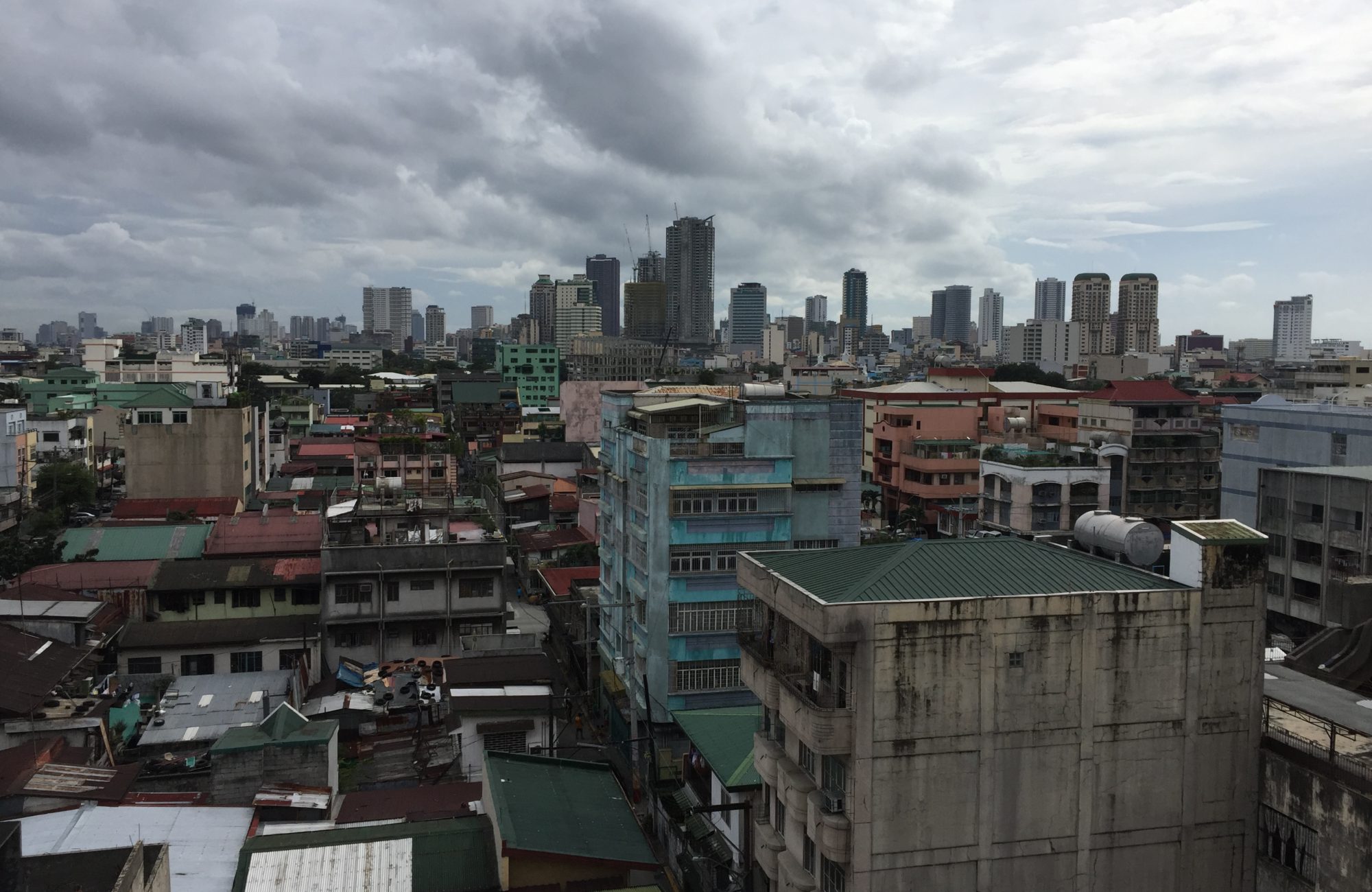
An Unmitigated Disaster? Perhaps Not (September 2021)

There is no other way to describe the Afghanistan situation than as a debacle of epic proportions. There is much blame to go around, and rightly so. A cursory Wikipedia study of the recent history of Afghanistan reveals that the CIA was involved during the time of the Russian occupation, providing material and monetary support through Pakistan to any group fighting against the Russians and the Marxist government the Russians established, and this included the Taliban.

The Taliban successfully drove Russia out of Afghanistan and established an Islamic-based government. Their error in judgement was to allow Al-Qaeda to establish a safe haven in Afghanistan, which led to the planning and execution of the 9/11 terrorist attack and brought U.S. retribution to Afghanistan.

Once U.S. forces forced the Taliban and Al-Qaeda out of Afghanistan, the U.S. established its own Democratic government. It did not take long for the Taliban to harass and attack U.S. forces and the Afghan government. Ultimately, twenty years later, the U.S.-backed democratic experiment in Afghanistan failed due to government corruption and a lack of support from the Afghan people.

It should be clear by now that the Afghan people prefer to have an Islamic-based government instead of either a Marxist or Democratic government. This is their right, although it may be a situation where they find themselves in a more oppressive society than expected, particularly when it comes to women’s rights and freedoms, music, art, dance, freedom of worship, freedom of expression, and many other aspects of Afghan life that were permitted and enjoyed during the past twenty years. 

Afghanistan is just one more in a long line of attempts by the U.S. to establish western democratic capitalistic systems in countries whose culture is not particularly receptive to such a system. Whether the rational is to stop the spread of communism, to protect U.S. business interests, or to achieve some other purpose, this just never seems to be successful. All we ever seem to accomplish is to create resentment and to lose opportunities to establish long-term alliances that benefit the people of both countries.

Limiting the blame for our Afghanistan debacle to the current Administration is all well and good, and clearly the Administration had an extreme failure in timing and coordination, so criticism is warranted. But this does not acknowledge the fundamentally unsustainable basis for many of the foreign policy decisions the U.S has taken over the years. The current torrent of righteous indignation, dramatic handwringing, dire predictions, calls for impeachment – all of it – is an epic waste of time.

Right now, we need clearheaded thinking. We need to keep this debacle in context. History shows that Afghanistan is a wild country that cannot be controlled for very long by anyone. The Taliban are in control for now, but how long will their control last? The Afghan people have had a taste of freedom and will not forget how sweet it can be. The Afghan warlords may have made the deals necessary for their survival, but that does not make them Taliban.

The Taliban would be well advised to allow Afghan women to work and speak and study, and to allow the Afghan people some degree of personal freedom of expression. In this way the Taliban may be able to achieve a stable Islamic state. Otherwise, there will be no lasting peace in Afghanistan.

Our regional interest was, and is, to prevent the continuation of terrorist attacks on the U.S. and our allies. Our current interest in Afghanistan also concerns its natural resources, more specifically, rare earth minerals. In addition, it is in our best interest to minimize Russian and Chinese involvement in Afghanistan to the greatest extent possible so that the destiny of the Afghan people remains their own.

Alliances within Afghanistan seem to be fluid, always changing in pragmatic ways. In this spirit, why not continue to pursue our interests by developing an alliance with the Taliban?  The Taliban is now effectively the government of Afghanistan, supported or at least accepted by a majority of the Afghan people.

We have only to look at our experience with Vietnam as an example of how a successful alliance can be created between countries following years of conflict. Vietnam is an increasingly important trading partner of the U.S. and is now accepted by the American public as such. Past differences have been put aside. 

The Taliban will soon be faced with a great deal of difficulty in continuing to provide the services that Afghans have become used to, such as the availability of fresh water, food, electricity, medicine, etc. Unlike other countries who have had to live through conflict, the basic infrastructure in Afghanistan remains intact. Who better to assist in the continuation of these services than the people who paid for and installed them, namely the U.S.?

It is understood that the U.S controls Afghanistan’s monetary reserves, and that Afghanistan is no longer receiving financial support from foreign benefactors. The Taliban has limited financial resources itself. Having the U.S. recognize a new Taliban-based Afghan government and allowing the new government controlled access to Afghanistan’s monetary reserves would be of great benefit to the Taliban.

Initially distasteful though it would be to both the U.S. and the Taliban to form an alliance, this could be of great benefit to both parties.  

The U.S. has a tradition of religious freedom, and in principle this extends to Islam as well. Islam does not have a very well-received presence in the U.S., primarily due to Islamic terrorism, but that can certainly change. If Islamic terrorism is no longer a concern, Muslims would be accepted more warmly into this country and become part of its melting pot culture.

Instead of expecting other countries to change their government and customs to match our own, the U.S. needs to learn to accept countries for who they are.  This whole focus on nation-building has been an epic failure and has done nothing but cause discord and resentment wherever it has been attempted. Even assuming that this was always a noble cause and never an attempt to protect the interests of American companies, it has proven to be an unsuccessful policy long-term. Leading by example instead of by force is likely to be a much more successful strategy.

There is much to evaluate regarding the debacle in Afghanistan. The intelligence community and the Pentagon appear to have been misleading several administrations regarding the actual conditions in Afghanistan. Independent military contractors have been financially exploiting the American people for their support services. Politicians have ignored problematic questions so that they could continue to receive dark money PAC donations in exchange for appropriating billions of dollars to the Afghanistan war effort. God only knows how much of the appropriated money was wasted on unnecessary materials and equipment, or just disappeared into unknown pockets and bank accounts.

How many years ago did Afghanistan become more about the business of war than about the principles of war? 

Instead of blaming the current and/or previous administrations for this ongoing debacle, we should be asking what comes next? The ongoing withdrawal is going to play itself out over the next few weeks, a month at most, hopefully without too many horrific acts being committed by undisciplined Taliban religious zealots. There is little that the U.S. can do to prevent this should it occur. 

At this point, regardless of what President Biden says or does, his administration will be blamed for losing the war in Afghanistan, even though history will provide him with some vindication. Previous administrations continued to support a corrupt Afghan central government that did not have the support of the Afghan people or the military. In the end, the Afghans did not believe that there was anything worth fighting for, which is why the government collapsed so quickly. The U.S. should have left Afghanistan years ago.

Extending an olive branch to the Taliban and negotiating an agreement that leads to a new alliance within the Islamic world seems like a worthwhile effort. This may prove to be the best means of preventing future terrorism directed towards the U.S.   

Would the Taliban agree? It is certainly possible. The Taliban needs access to Afghanistan’s finances, expertise in running the country’s infrastructure, and legitimacy as the new Afghanistan government. In addition, the U.S. would be a wealthier and less-threatening partner to either Russia or China, both of whom have a long history of mistreating Muslims and of exerting a heavy controlling hand on those countries that align with them. 

This is an alliance that would benefit both sides. It is certainly something to consider.

The Unborn Shall Live, The Born Shall Die (September 2022)

One day a troubled young man with two brand-new assault-style rifles murders 19 innocent children and 2 teachers in an elementary school, a few days later the NRA holds its annual convention in the same state where the slaughter of children and teachers occurred so that it can defend the rights of the young man and others like him to buy weapons. 

Some may say that this is just a coincidence, or perhaps simply fate. But saying that denies the connection between the callous indifference of the NRA in promoting guns as a solution to society’s ills and the willingness of troubled young men to use guns to achieve a final murderous solution for their personal pain.

We have already heard the same old tired pleas from the left for a ban on assault-style rifles and high-capacity magazines, improved universal background checks, and the establishment of a national registry of gun owners. 

And we have already heard the same old empty platitudes from the right about how their hearts break for the families who have lost children to senseless violence, followed by their truly heartfelt affirmation that all Americans should own at least one gun if they are, in fact, true patriots.

Why should this latest tragedy result in any change in our collective response?

It is interesting to note that the manufacturer of the weapons used in Texas to murder these children decided not to display their weapons at the NRA convention because of the distraction that their attendance would represent.

However, this is the same company whose marketing campaign shows a small child holding an assault-style weapon with a caption stating that this is the way to indoctrinate our children into this country’s gun culture so that they will grow up the right way. 

The same demographic that is horrified that some pregnant women may choose to have an abortion because they are not ready to be mothers and to take on the lifelong responsibilities that motherhood entails appears willing to let innocent children be slaughtered by disturbed people as an acceptable price to pay to preserve our collective right to arm ourselves against our domestic enemies, real or imaginary. 

This is not to mention the even more significant problem of cheap handguns being imported into our inner cities from adjacent states that have lax gun laws, to be used most often by young men of color to murder other young men of color. 

The fact that death by gun is the number one cause of death for our children does not seem to matter or even register in the hearts and minds of this demographic.

Our inability to acknowledge the fact that guns are being used to kill our children – not trans sex education, not critical race theory, but guns – clearly reveals the soulless nature of our society. We have a very long way to go before the body count is high enough and personal enough to make a difference.

We can take some comfort in the fact that the overall murder rate in the United States of a little over five people per 100,000 population places us 89th worst out of 230 countries/dependent territories, as per UN statistics, so things could be worse. As a comparison, however, the overall murder rate in Canada is a little under two people per 100,000 population, placing them at 151st, so things could be much better.

It is self-evident that we have a gun problem in this country – our children are being murdered with guns. To say that this is not a gun problem is to deny reality. 

The fact is that we have sold our collective American soul to the NRA and the gun manufacturers and the weapons dealers, and all the dark special interest money that comes from them. 

The assault-type weapon ban that had been passed in 1994 with some measure of bi-partisan support was allowed to expire in 2004 by the Congress of the United States. The assault-type weapon quickly became the weapon of choice for those who desired a long gun, and now dominates long gun sales. With the development of improved cartridges, the assault-type long gun became a reasonably proficient hunting rifle, making it a more mainstream weapon. However, its main applications continue to be for personal protection, masculinity enhancement, and as a defense against nonexistent government tyranny.

The 2nd Amendment, as proposed by James Madison (4th President of the United States, co-signer of the Declaration of Independence, primary author of the Constitution of the United States) and ratified in 1791, was intended to allow the creation of civilian forces, i.e., militias, which could counteract a tyrannical federal government. The concern was that the federal government would begin to exert authority over the individual states in the same way that the British government had exerted authority over the colonies. The 2ndAmendment was intended to prevent this possibility.

 In 2005, the Supreme Court determined by a 5-4 vote (District of Columbia v. Heller) that the 2nd Amendment applied to individual Americans and not to the collective citizenry. This was in blatant disregard of the original intent of the 2nd Amendment and a clear example of conservative judicial activism. 

So instead of having well-regulated state militias, we now have an unregulated group of disorganized extremist gun nuts who believe that the 2nd Amendment means that they can arm themselves with whatever and however many weapons they choose, and to carry them to the grocery store or to Starbucks or to wherever they feel threatened, or to wherever they feel that the intimidation that comes from an armed show of force is necessary. 

Based upon the 2005 Supreme Court decision, along with the range of ill-conceived state laws that continue to eliminate any remaining restrictions on gun ownership, they are right.

So, nearly twenty years later, as a society, what do we have to show for our gun culture? More death, more fear, more sorrow, less social cohesion.

It is quite clear by now that there are tens of millions of Americans who believe that this is a small price to pay for our personal freedom to arm ourselves, to have personal arsenals, to make weapons of mass murder available to all.

As a society we do not seem to care about the extent of this death as long as it is not our own children who are slaughtered or murdered. If we did care, we would do everything possible to prevent this type of death from occurring again and again and again.

This is just one more example of our collective, self-centered hypocrisy. We insist on protecting our unborn children based upon a rigid religious dogma that is followed by a minority of our citizenry. But we refuse to protect our born children based upon the NRA’s dogma that encourages political expediency, paranoia, patriotic propaganda, and corporate greed.

So, as a preemptive and empty gesture, let us all express our sincerest sympathies – our hearts go out to the families whose children are fated to be slaughtered in schools, and to the families whose children are fated to be murdered in pointless gang-related inner-city shootings. We truly feel your pain.

There – done. I for one feel so much better.

An American Tragedy (April 2022)

The ancient Greeks were famous for their tragedies about gods and heroes, Shakespeare was famous for his tragedies about kings and courts, but this ongoing American tragedy may outdo them all by the time all is said and done.

At the center of the tragedy is President Trump, hero as well as anti-hero. By his own words and deeds he set himself separate and a savior, which became both his greatest strength and then his most profound weakness.

President Trump demanded unconditional loyalty, subservience and allegiance, and created a division within this nation between those who gave him what he demanded and those who would not.

Now he has fallen, taken down by the consequences of his excesses. He leaves behind a damaged nation that searches for a way forward. We look for guidance from our leaders and from our pundits, but they speak with voices that do not ring true. The voices are hollow, insincere, confused, unsure.

History will eventually write of President Trump’s triumphs and accomplishments in an honest and thoughtful manner, but not today. Today appears to be a day for vengeance and retribution, a day for a wooden stake to the heart, a day to revel in the downfall of someone who flew too close to the sun. 

Now more than ever we need to be honest with ourselves.

Half of the nation doubts the validity and fairness of our Presidential election. If there was fraud and cheating that did indeed influence or even change the results of the election, then this must be known. President Biden must establish a commission of the wisest among us to find the truth, but is he wise enough to do so? 

There is no way forward to healing the nation without fully and honestly addressing these concerns and suspicions, but the voices whispering in President Biden’s ear may be like the sirens from the Illiad, so seductive in their partisan song of blood and vengeance that they lead him to ruin before his voyage has even begun.

President Biden will not succeed in his vision for this nation if he cannot convince those Americans who did not vote for him that he is their legitimate, duly elected president. This must be his first priority.

President Biden must also realize that he is surrounded by allies of convenience who have their own agendas – Pelosi, Schumer, Harris, Sanders, and Cortez among others – and who cannot be trusted to give him advice free from their own self-interests and prejudices. The best advice may in fact come from the other side of the aisle. 

This rush to impeach President Trump during the last days of his presidency is a clear example of an extremely divisive idea that should have no place in an administration dedicated to uniting the country, and this idea should be discouraged by President Biden in a forceful and direct manner instead of weakly sidestepping around it as he has done up until now.

President Biden must also realize that kind words towards President Trump and the total rejection of disparaging or vindictive remarks will bring him much more goodwill and cooperation from Trump’s supporters than any disappointment voiced by his allies of convenience or the fickle media will hurt him. There is nobility in showing benevolence towards those who have lost the battle, and there is the real possibility that a lasting peace may be achieved by doing so.

President Biden must also object to how the First Amendment right to free speech has been stripped away from President Trump and others. This is more of an assault on our Constitution than anything President Trump has ever said. Let everyone express their opinions in accordance with the First Amendment, and let their opinions rise or fall as they may. We cannot be afraid of ideas that may be different from our own and still be free.

President Trump has earned the right to express himself to his millions of followers. If Twitter, Facebook, Apple, Google, and Amazon insist on using their monopolistic powers to limit ideas and opinions to only those that they deem acceptable, then it is time to recognize that social media platforms are really a new form of public utility and need to be regulated accordingly. Free speech must be available to everyone, certainly to the President of the United States. Five multi-billionaires cannot be allowed to control the thought of a free nation.

As it stands right now, President Trump finally gave a subdued and heartfelt speech that expressed his appreciation for being given the opportunity to lead the nation. It was a speech that did not include any claims about the presidential election, a long listing of his accomplishments, or attacks on his political enemies and the media. It is possible that he is beginning to develop a new perspective on his time in office now that it is clear his time is coming to an end. 

Losing this election may be a somewhat humbling experience for President Trump, but how are we to know when he has been silenced? Hopefully he will find a new means of expression that is more meaningful and significant than either his tweeting or his rallies have proved to be. Less entertainment and more substance would be more fitting for an ex-president.

One day, when there are events where the ex-presidents appear together, hopefully we will see President Trump standing side by side with Presidents Carter, Clinton, Bush, and Obama, each honorable men who served the country the best that they knew how, each with their own flaws and limitations along with their successes, but patriots all. 

Let us not squander this opportunity to unite as one nation with one common purpose as a free people, to lead the world forward with enlightenment and wisdom, to solve the unsolvable, to achieve the unachievable, to bring fairness and justice to all.